
Vinci Stories · Editorial preview
The Night Watch: The Painting That Was Cut Down
How do you understand a composition when parts of it are missing?
- Artist
- Rembrandt van Rijn
- Work
- The Night Watch
- Date
- 1642
The film
A verified watch link, captions, transcript, approved image credits and video metadata will appear here after release approval.
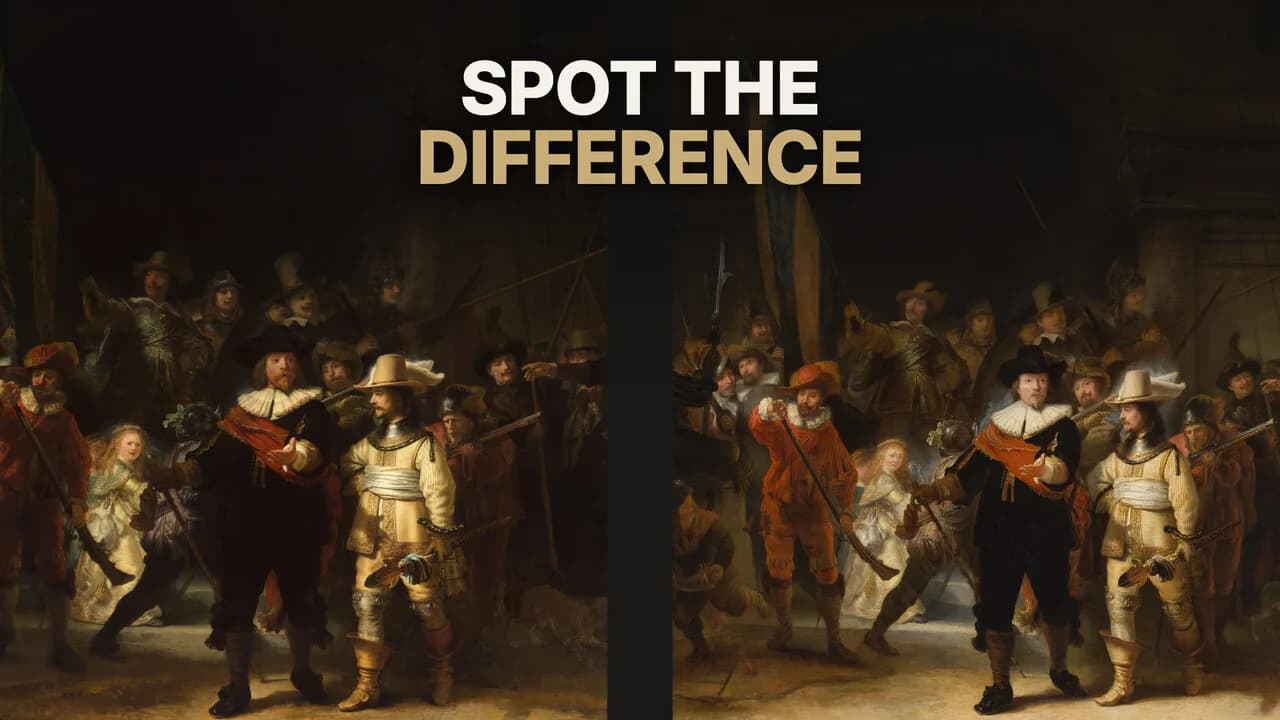
The Night Watch survived a major physical alteration. The story of its reduced edges offers a way to think about the difference between a work as conceived and a work as it comes down to us.
The story behind the work
The familiar painting is also an object with a changing physical history. Scale and placement have consequences for what viewers encounter.
Its trimming in 1715 altered the boundaries of Rembrandt’s composition. Reconstructive evidence helps researchers discuss the missing sections, but reconstruction must be labelled as such.
Conservation and documentary evidence tell different parts of the story. Together they can explain why a masterpiece’s current appearance should not be assumed to be its first.
How to look closer
Identify the present edges before presenting any reconstruction.
Compare documented earlier depictions to the current painting, with source attribution.
Explain where direct evidence ends and interpretive reconstruction begins.
What the editorial team is checking
- Which reconstruction is being used and under what reuse terms?
- Can viewers toggle original surviving surface and reconstruction?
Know someone who should see this?
Send them the story of The Night Watch.