
Loading…
Diné (Navajo) · Signed Historic Pottery
US$800
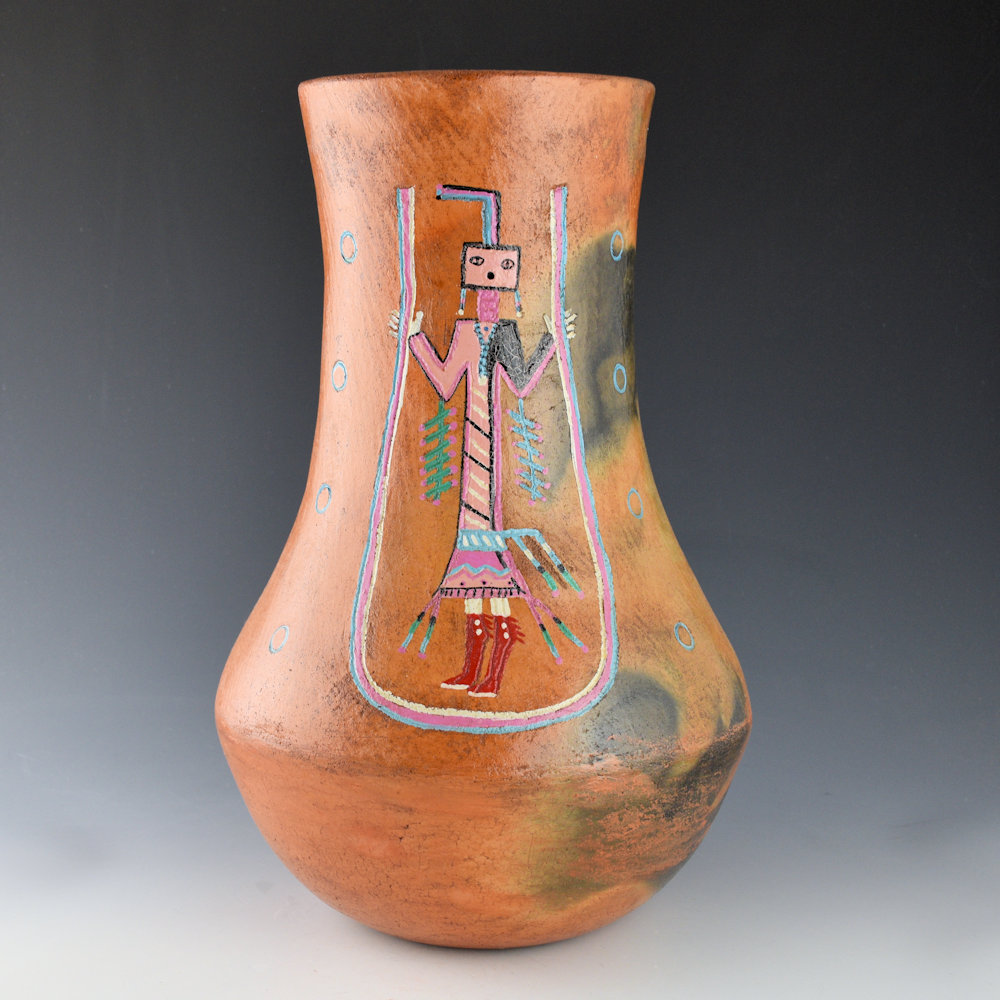
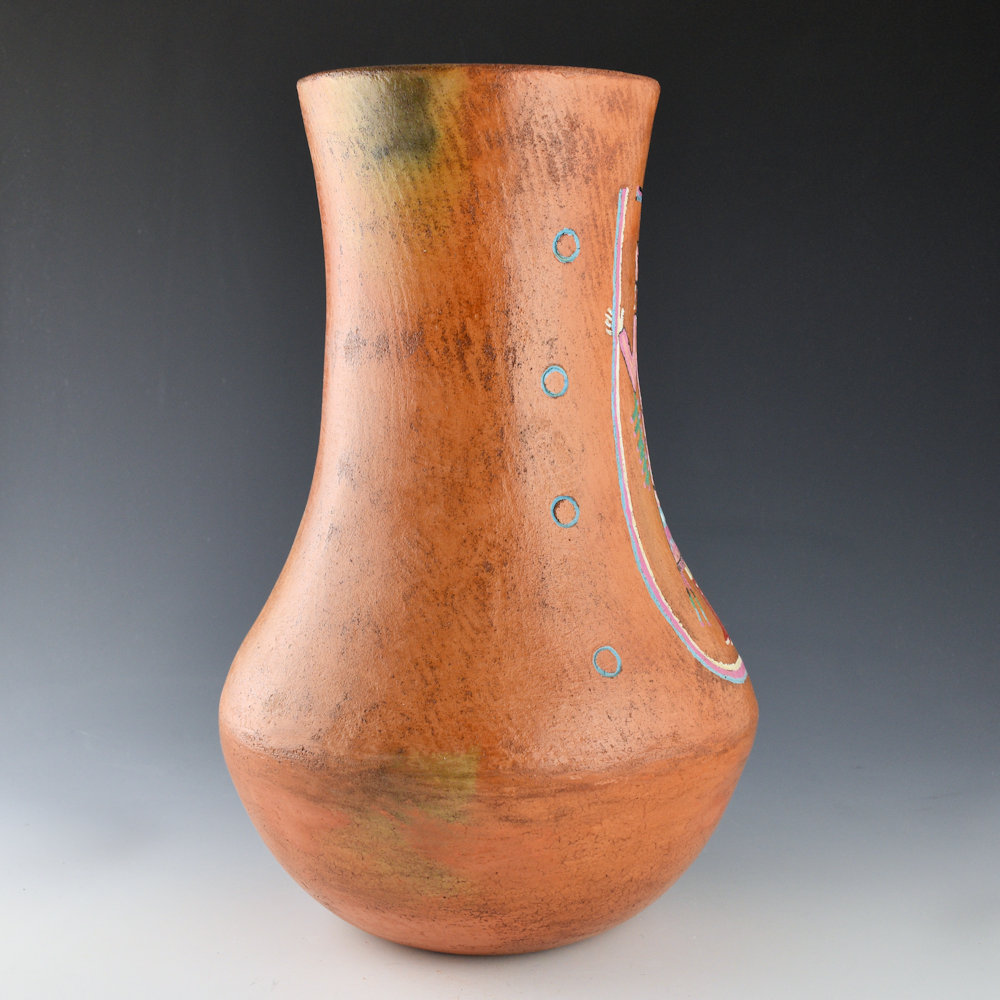
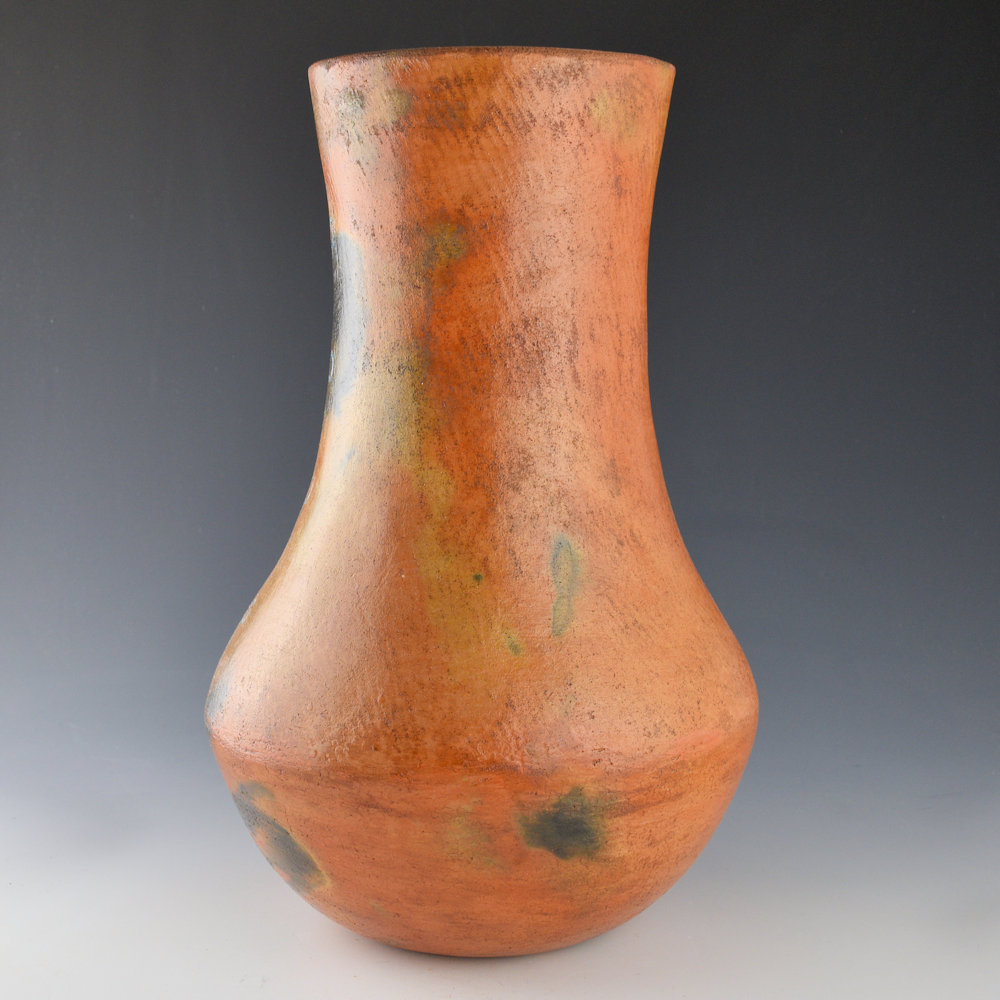
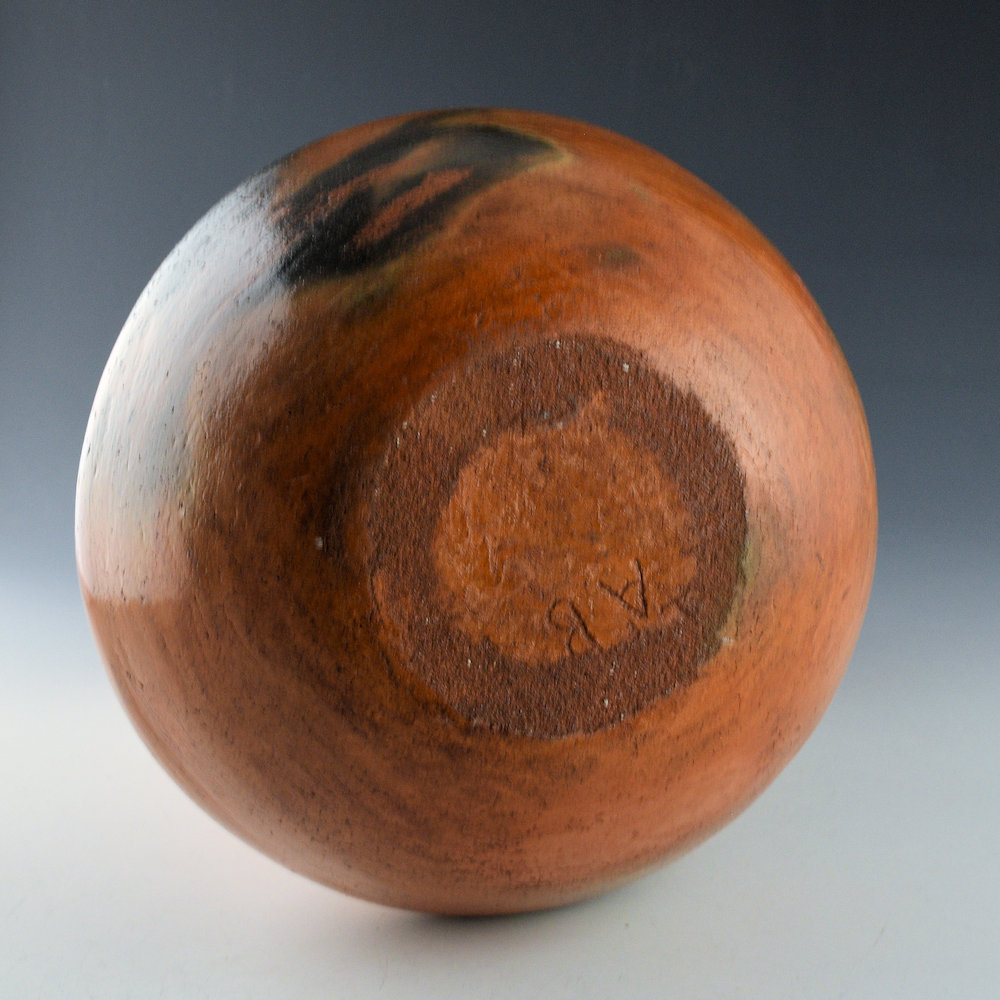
This is a large long neck jar by Aleita Bitsie (deceased). She was the mother of noted potter Betty Manygoats. This is the second piece of her work we have come across in the gallery. The jar has a low shoulder and elongated neck. One side has an incised Rainbow Yei figure. The jar was traditionally fired and there is beautiful coloration on the surface. After the firing, the Rainbow Yei was painted. Then it was covered in pinon pitch in the manner of traditional Navajo pottery. The piece is signed “AB” on the bottom in the clay. It is in excellent condition with no chips, cracks, restoration, or repair. It is a fascinating piece of Dine pottery history!
This is a large jar by Aleita Bitsie (deceased). She was the mother of noted potter Betty Manygoats. This is the first piece of her work we have come across in the gallery. The jar has a sharp shoulder, sloping sides, and an elongated neck. The jar has three large horned lizards on the shoulder of the jar in relief. On the opposite side are rainbow bands. The jar was traditionally fired to create the blushes on the surface. After the firing, it was covered in pinon pitch in the manner of traditional Navajo pottery. The piece is signed “AB” on the bottom in the clya. It is in excellent condition with no chips, cracks, restoration, or repair. It is a fascinating piece of Dine pottery history!
Why the horned lizard? “In the Diné culture Horned Toad is addressed as “grandpa” (shicheii). It possesses spiritual power. When you see one, pick it up and rub it on your chest and say, “I will be in good health and harmony.” If you have corn pollen sprinkle it as an offering and then let the horned lizard loose where you found it. You will then have good health and harmony. It is believed that the horned toad is dressed with an armored shield, which is called arrowhead. The spiky horns on the body represent the arrowheads. This protects the horned toad from predators. It was placed on earth with songs and prayers so that in the future the Diné would utilize it. The Diné still know and use its sacred prayers and songs for protection.” Traditional Dine Teachings on Wildlife (1998)
Offered by King Galleries. See it on the gallery's website