
Loading…
Contemporary Pottery · Hopi - Tewa
US$2,000
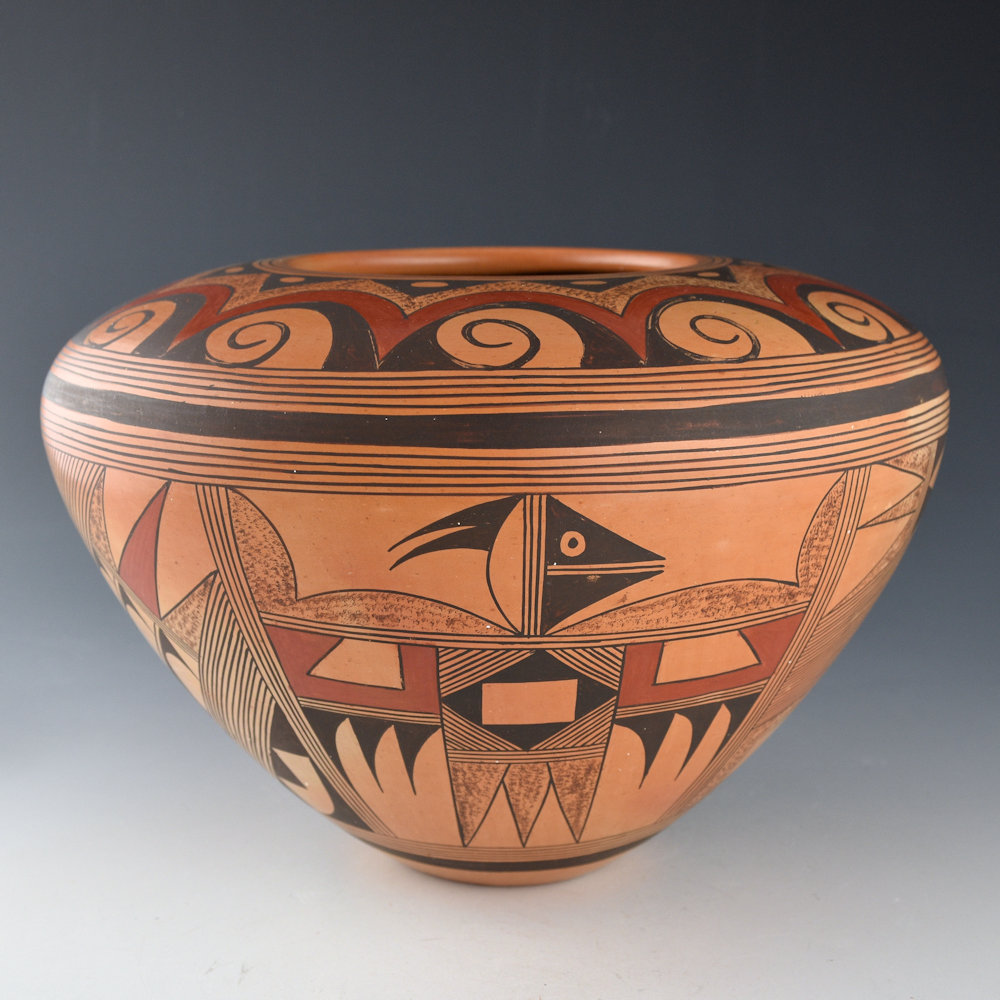
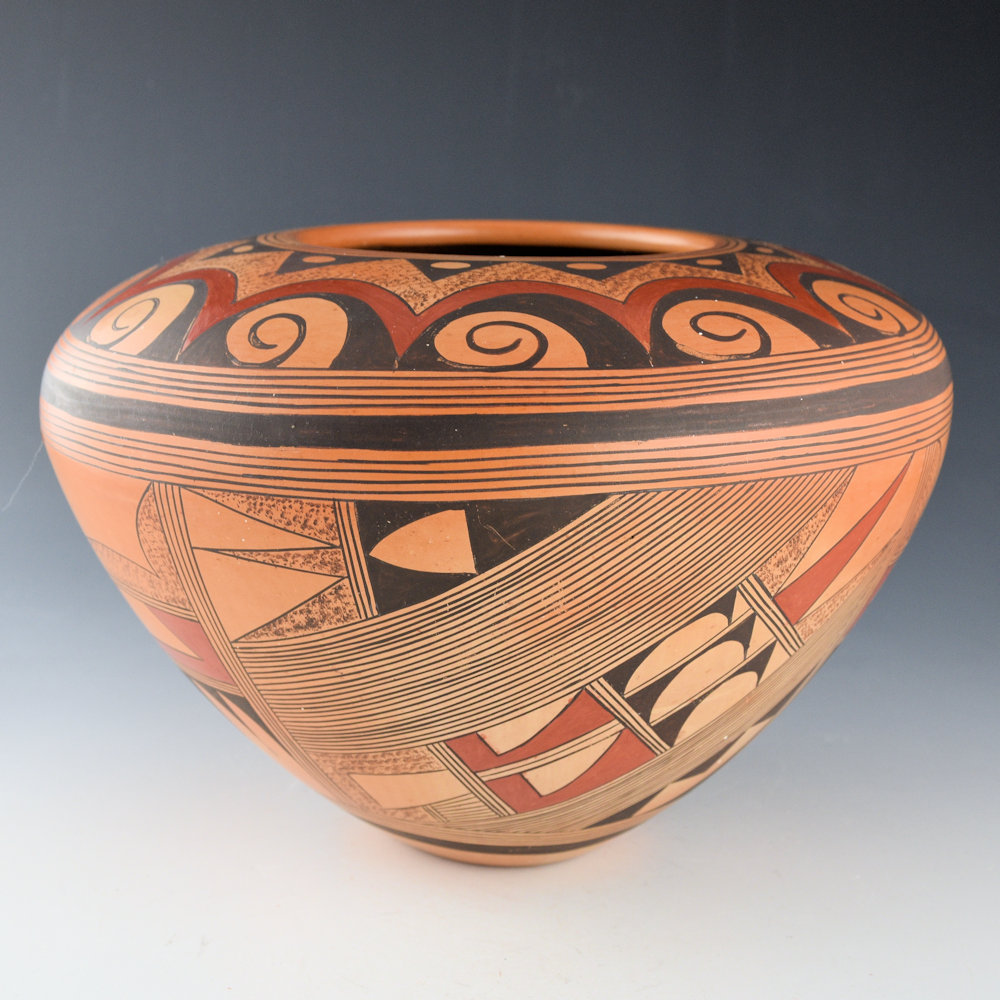
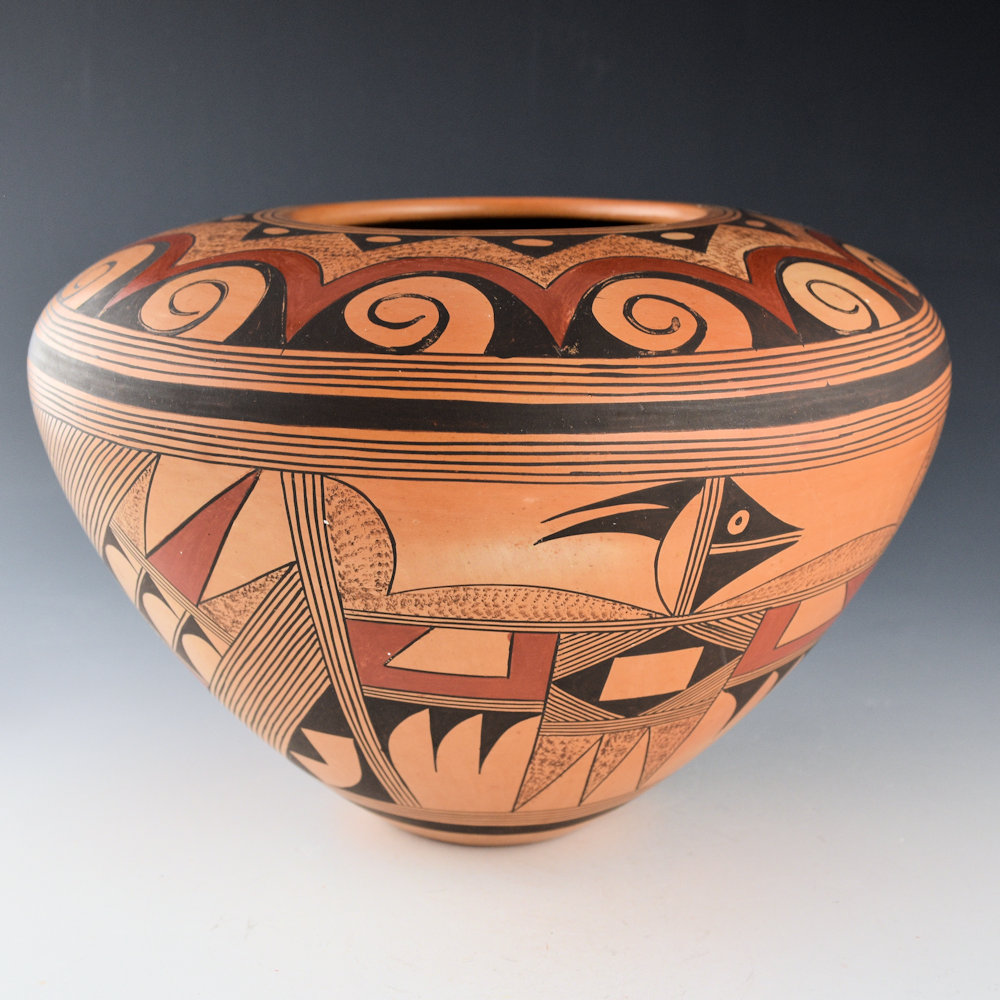
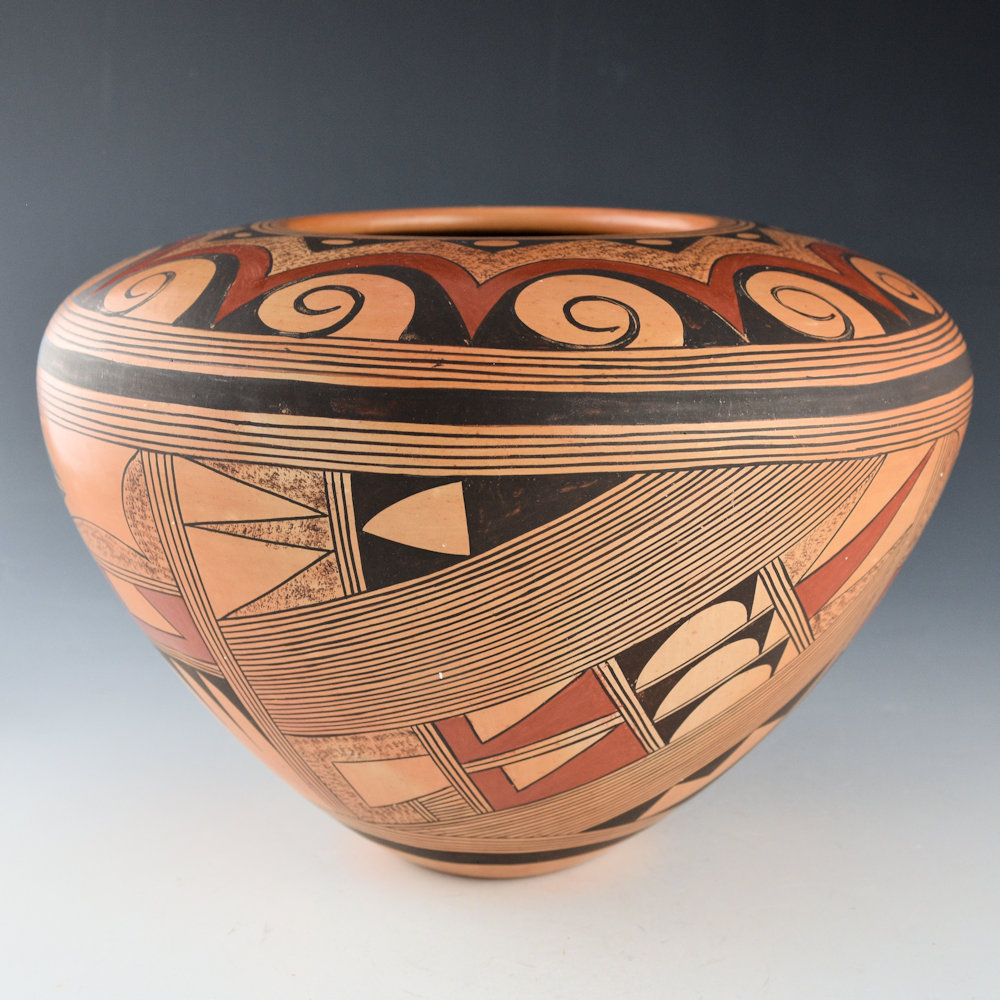
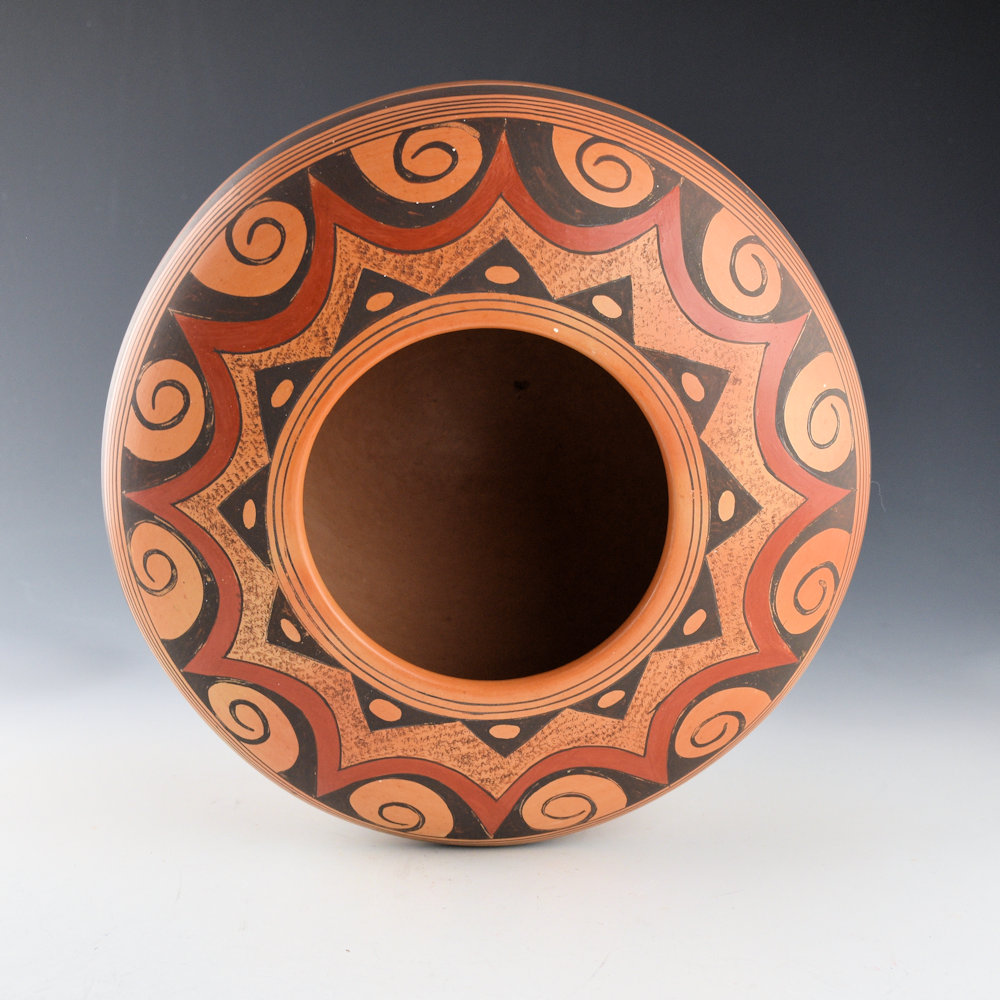
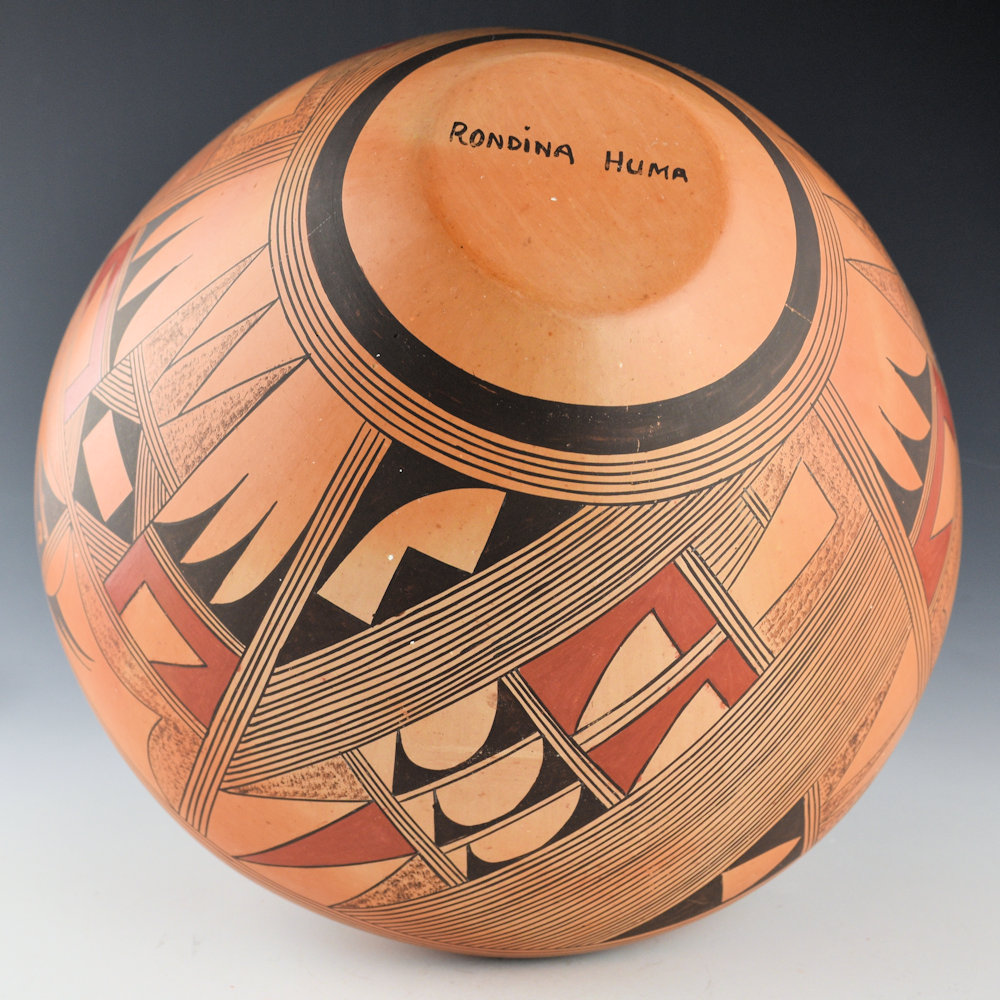
Rondina Huma has certainly been one of the most influential Hopi potters working today. Since her two-time “Best of Show” award at Santa Fe Indian Market, her tight style and intricately painted pottery has changed the face of contemporary Hopi pottery. Each piece is coil built, fully stone polished and painted with native clays and bee-weed (black), and native fired. This is one of her pieces from the late 1970s. The bowl is coil built, stone polished and painted with bee-weed (black) and the red clay areas are stone polished. The top of the bowl has swirling clouds. The sides have an eagle on each side. They are separated by panels with VERY fine-line painting and the beginning of her shard designs. The bowl is also fully polished on the interior. It was traditionally fired which created some blushes on the surface. It is signed on the bottom, “Rondina Huma”. It is in very good condition with no chips, cracks, restoration, or repair. Definitely a classic of her early work in size and design!
Rondina said of learning to make pottery:
“My mentor was Beth Sakeva. I started making pottery around 1970 after I graduated from high school. I was living on the mesa in Tewa, and Beth was my neighbor. I learned how to coil and appreciate the thickness of the pottery. In the late 1970s Beth asked me if I wanted to go to this event called Santa Fe Indian Market. It was when I was there that I realized that if I was going to sell my pottery I need to do a better job so that I was selling quality artwork. In the 1980s I improved a lot. I had started out making big pots so it was hard to make miniatures or smaller pieces. One day I was looking at my pottery and I thought it just didn’t look too good. There was so much empty space around one big design. I was thinking, “How can I do this so my pottery is more detailed? What kinds of design can I use so it fills the big open spaces?” Sometimes I’ll dream or visualize what my designs should be. If something comes to my mind at night, I’ll get up and draw it on a piece of paper immediately. I would think of what I had learned from Beth and thank the earth for giving me the opportunity to use part of nature in my pottery and thanking God for giving me talent.” Rondina Huma, Spoken Through Clay
Offered by King Galleries. See it on the gallery's website