
Loading…
30th Anniversary Show October 24, 2026 · Hopi - Tewa · Signed Historic Pottery
Sold
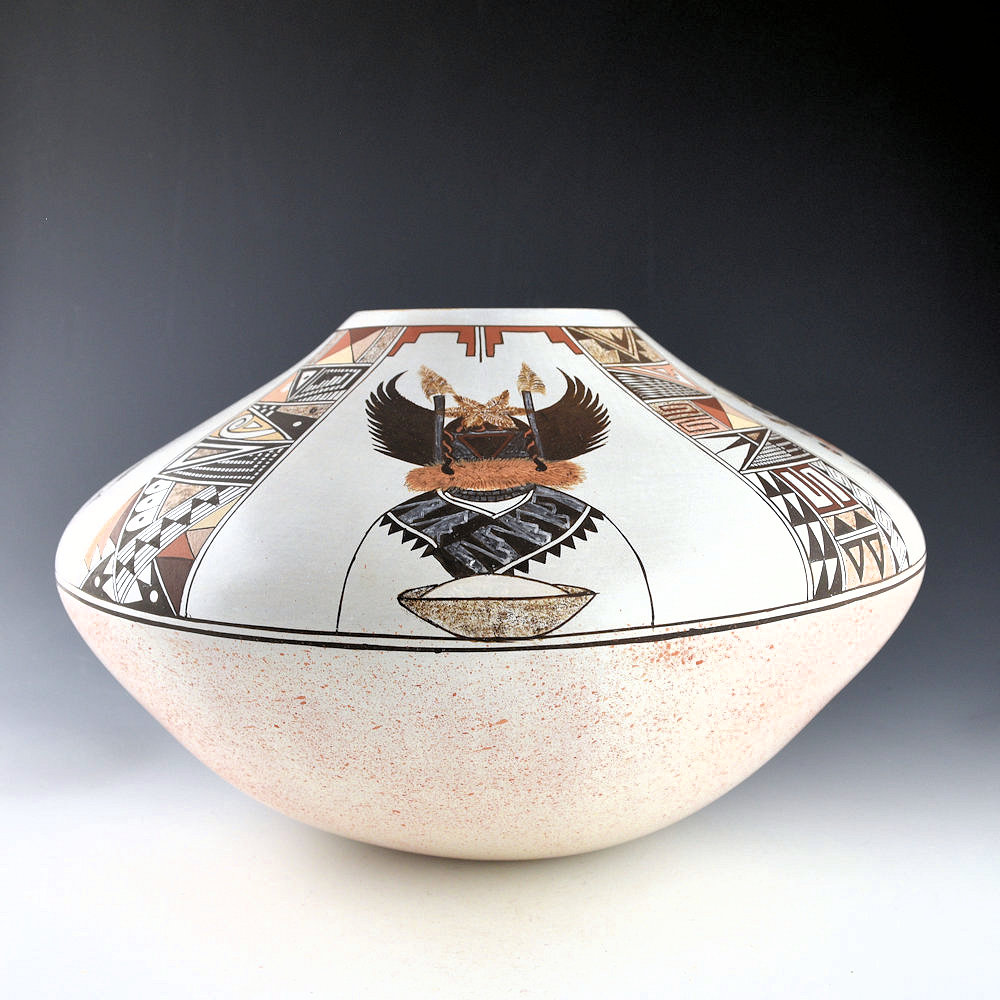
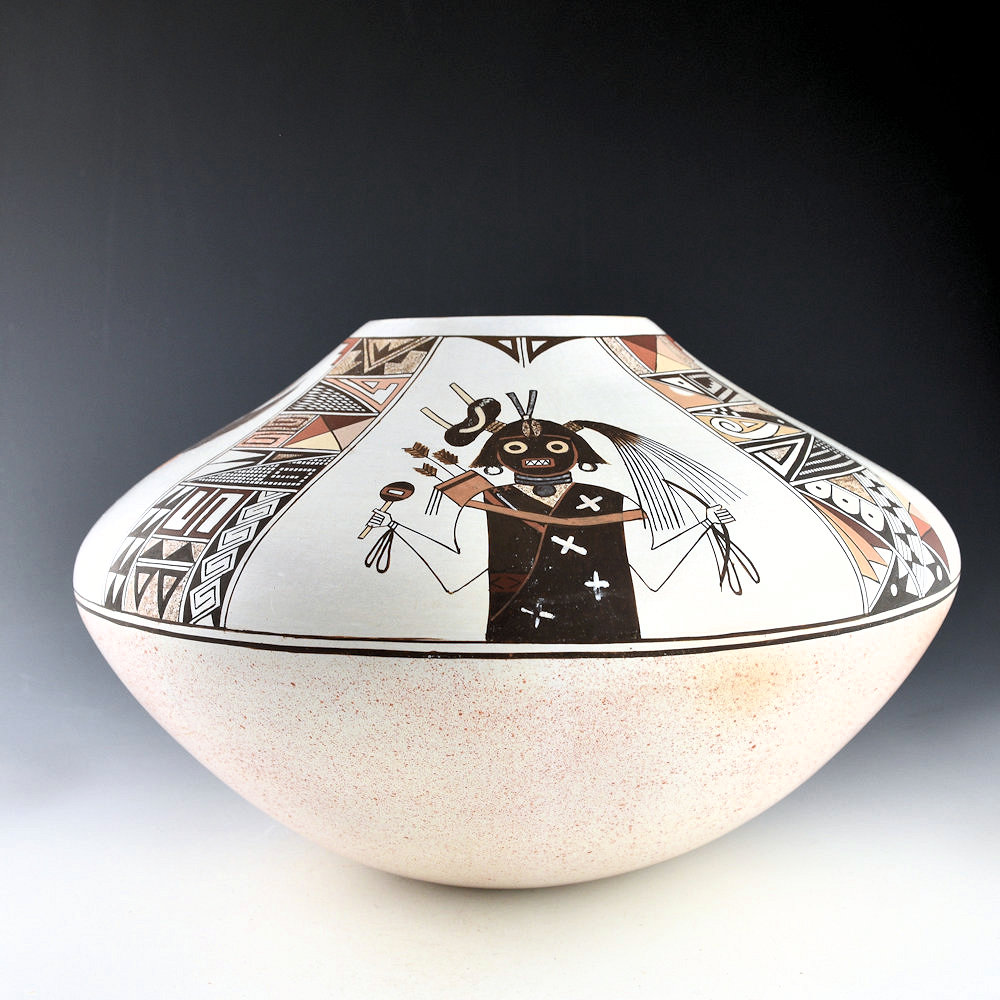
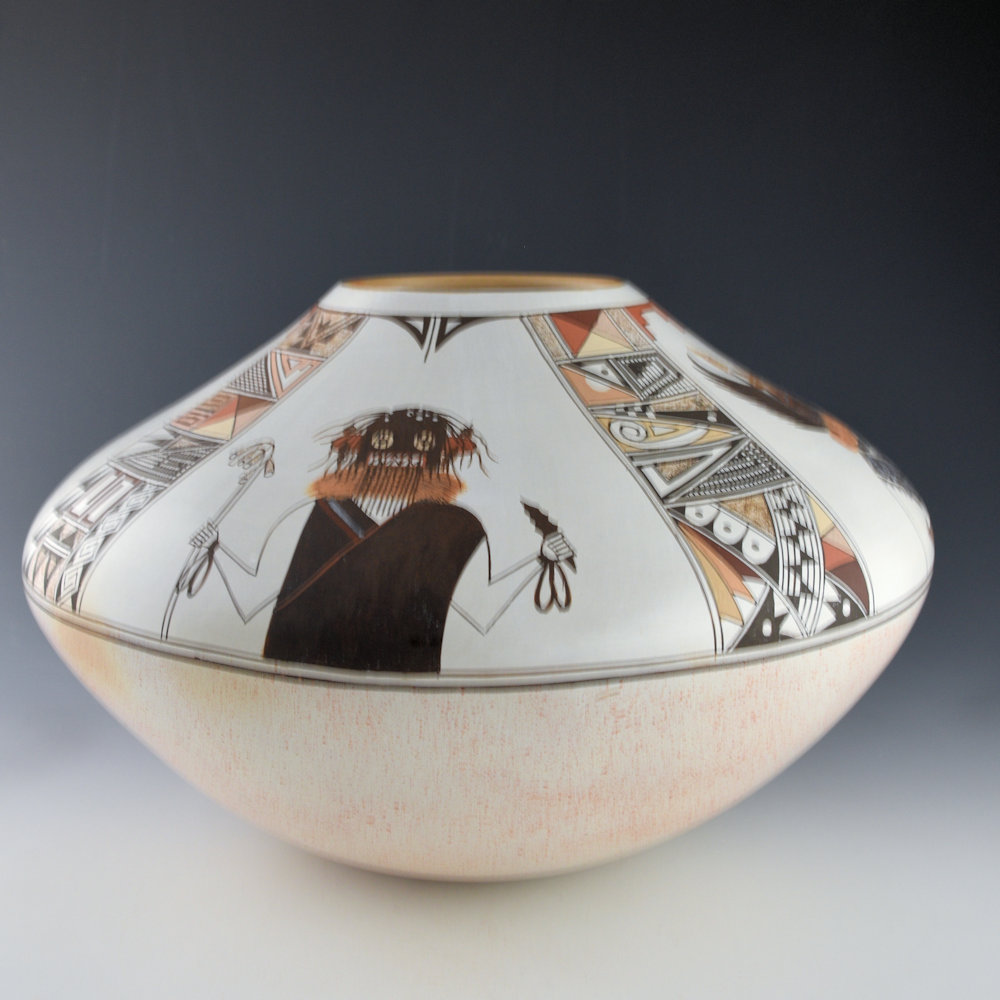
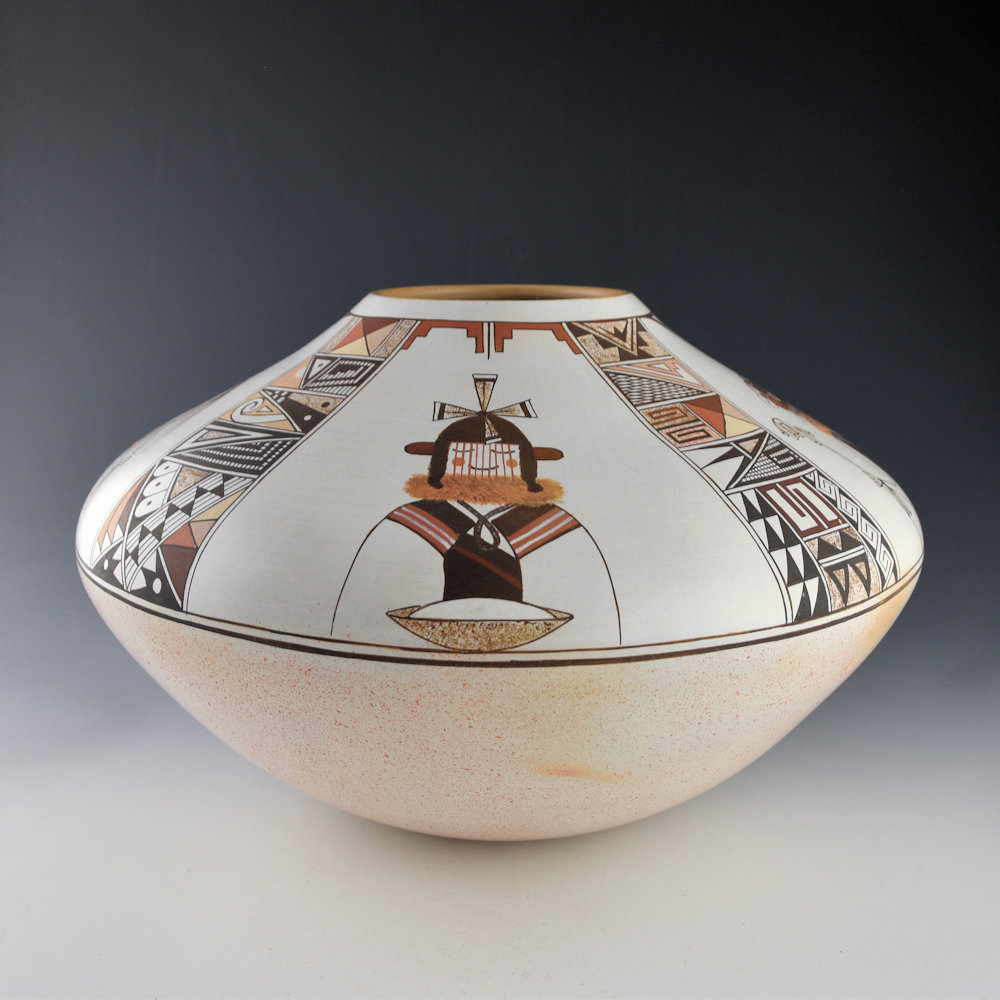
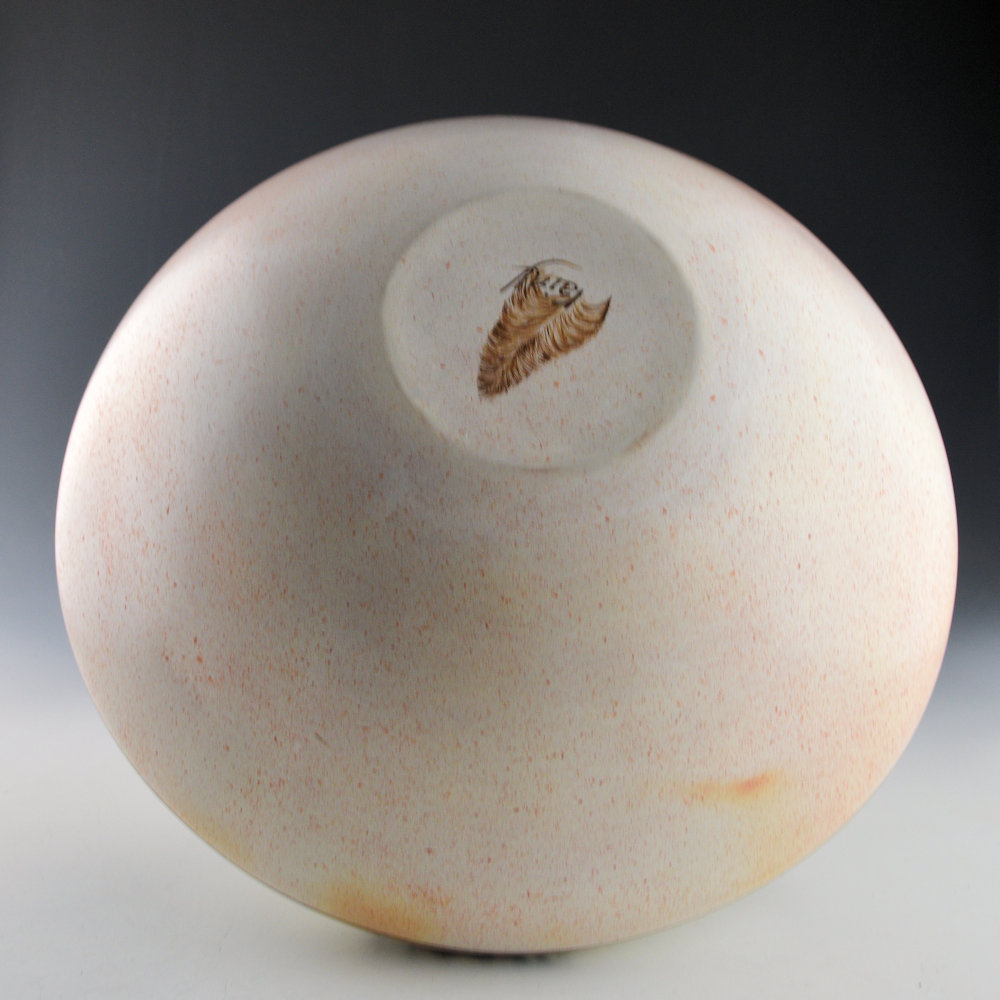
This is one of the largest Katsinas jars by Rainy Naha. It is intricately designed and painted. The jar is entitled, “Enduring Strength of Women” and has four female Katsinas. There is a Crow Mother, Soyok Whuti, Grandmother Katsina, and He-e-e (Warrior Maiden). Each is tightly painted and distinctive. Rainy said she uses female figures to represent Hopi women. She said this jar, in particular, shows the growth of women from the young warrior (He-e-e) to the grandmother. The is the wisdom on the Crow Mother and the discipline of the Sokyok Whuti. Each figure is separated by a band of complex and tightly painted designs. Each section is perfectly painted and designed with cloud, rain, and four seasons designs. Note all the colors and intricate lines! The jar is painted with various clay slips along with bee-weed, which is black. It was traditionally fired and it is signed on the bottom with a feather and “Rainy”. This was made in 2019 and it is in excellent condition with no chips, cracks, restoration, or repair.
Stunning! This large jar by Rainy Naha is intricately designed and painted. On this jar, she has painted a Butterfly Maiden or Pahlik Mana on one side. She has a large tablita headdress, which is very intricately painted and designed. Note the feathers on the ends of the tablita, which are painted in her style of hallmark! The opposite side has a Bee Kasina (Momo). The Bee katsina is surrounded by additional bees!
Bee (Momo) appears in Mixed Dances and the Water Serpent Ceremony. He is a side dancer and focuses his attention on the children. He stings them by shooting tiny, blunt arrows with his little bow. If the child cries out in fear, Momo squirts a little water on the supposed wound and offers a tiny cup of honey from his headpiece. As part of the Powamu, Momo and the other Katsinam are welcomed back and asked for their aid in bringing spring and new growth to the land. In addition to his antennae, Momo’s headpiece is crowned with a cluster of stalks which may end in flowers or fruit, or a stand of corn stalks. The Bee Katsina brings with him the gift of fertility for plants without which the people would starve.
Separating the two figures are bands of Hopi-Tewa designs. Each of the squares has a different design from classic Hopi-Tewa pottery. Note the very intricate checkerboard and rain designs, along with all the various colors! So why the Awatovi designs? Rainy’s mother, Helen “Feather Woman” Naha, lived on a ranch in the Jeddito Valley, below the Awatovi Ruins and Helen was the first revivalist of their black and white pottery. Rainy has continued this revival with her innovative designs. The jar is painted with various clay slips along with bee-weed, which is black. It was traditionally fired and it is signed on the bottom with a feather and “Rainy”. Rainy has won numerous awards for her pottery at Santa Fe Indian Market and the Heard Market and her work continues to be a creative inspiration in Hopi-Tewa pottery.
Offered by King Galleries. See it on the gallery's website