
Loading…
Hopi - Tewa · Signed Historic Pottery
Sold
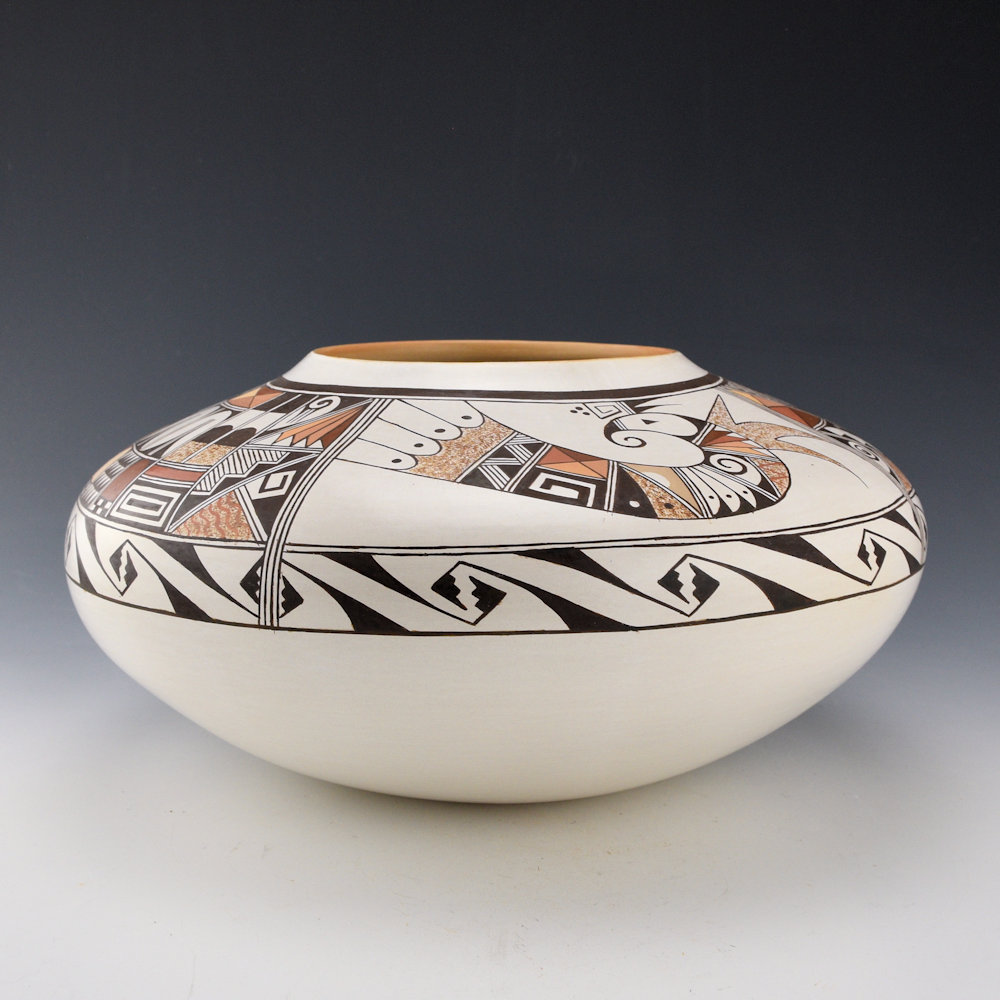
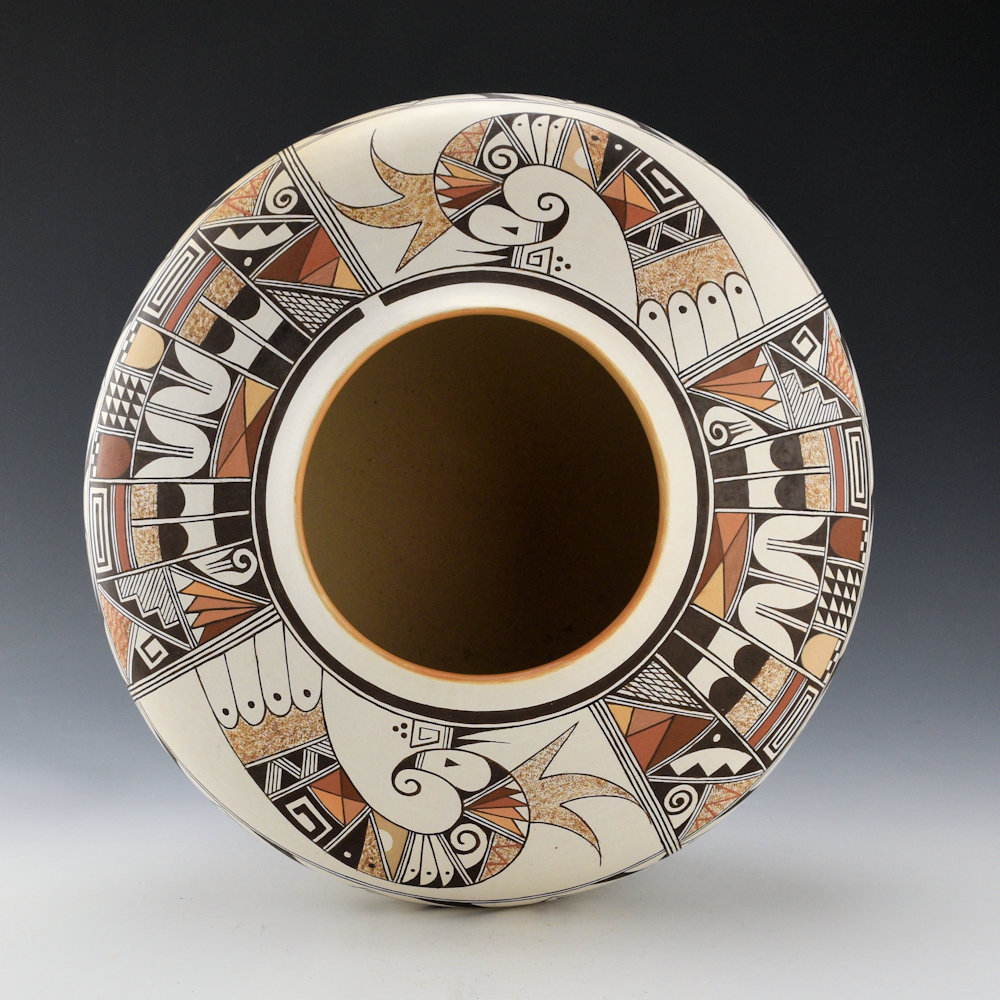
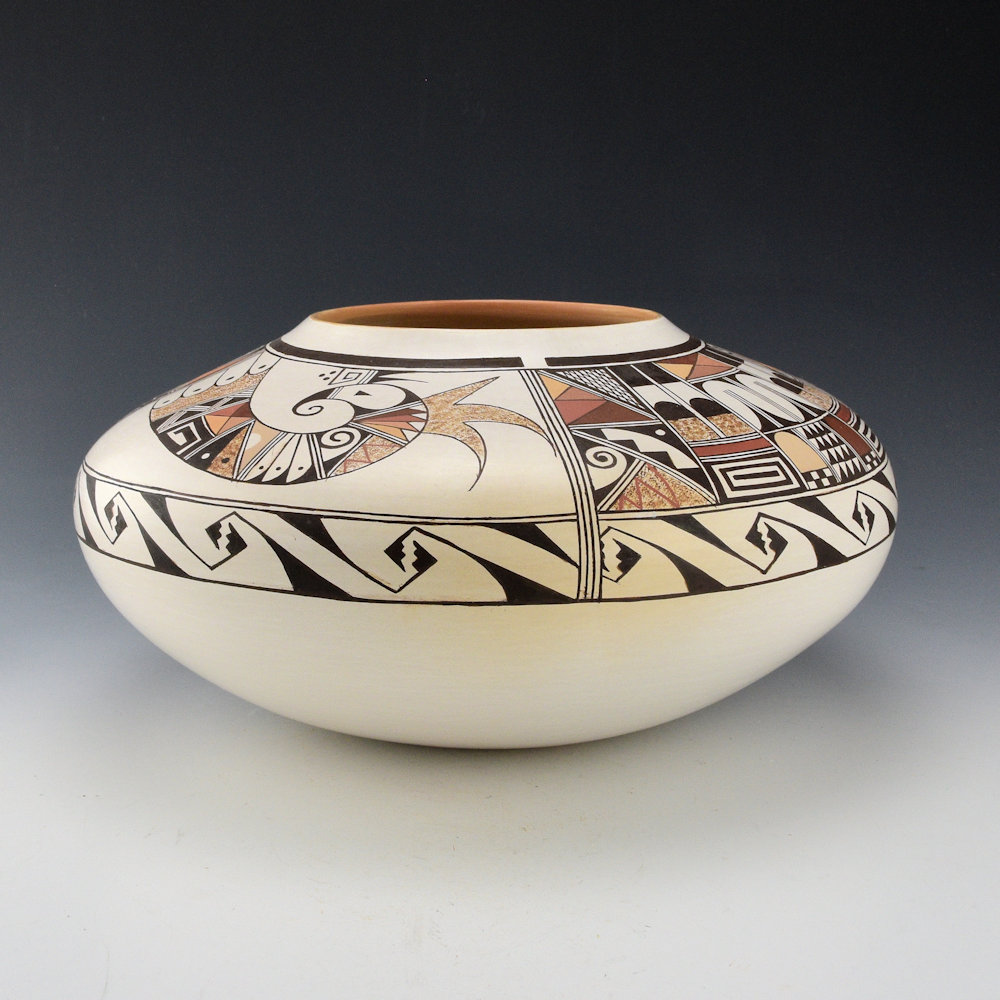
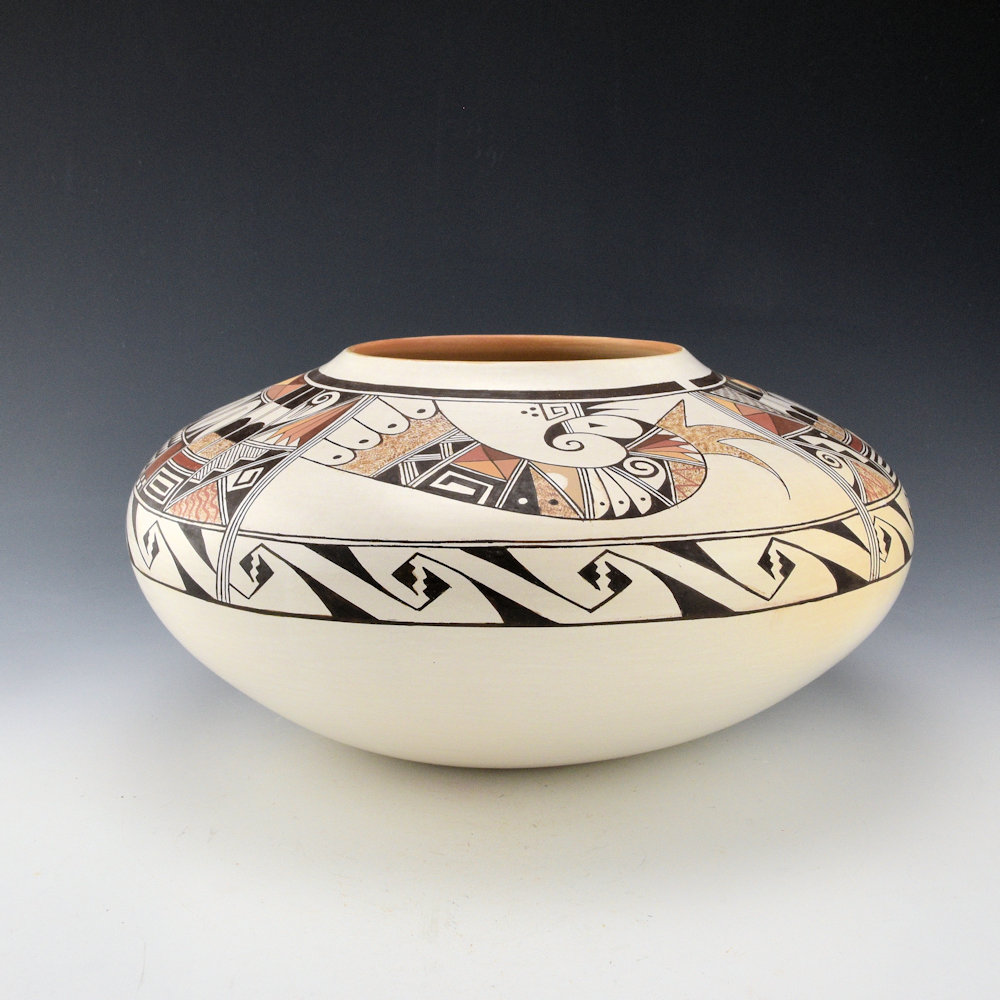
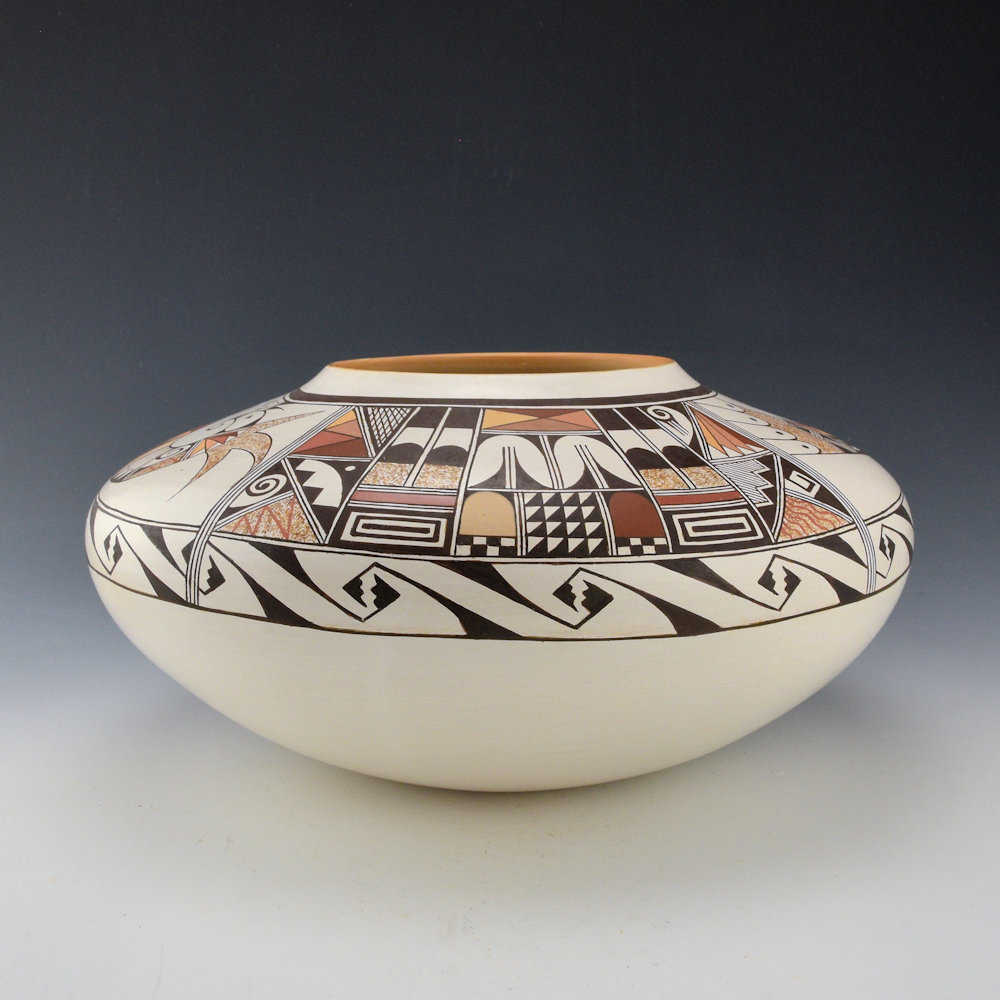
This is a unique bowl by Rainy Naha. It is one of those pieces that has a great story behind its creation. In 2008, Marti Struever and I created a show asking 12 Native potters to create a piece inspired by a particular jar by Nampeyo of Hano (see last photo). Rainy was one of those artists. Each artist could do anything they wanted, from re-creating the exact jar, to drawing inspiration from the shape or part of the design. Rainy chose both the shape of the jar and the bird. I remember her saying how she wanted to create her version of the Nampeyo jar. The bird on Rainy’s piece is one of her Hummingbirds. The large sections between each bird are certainly in Rainy’s style. You can see the design elements in the Nampeyo jar, and then Rainy’s additions. The piece is thin-walled and perfectly painted. It was a great addition to the show and I’m honored to have it back in the gallery. The piece was painted with bee-weed and clay slips. It was also traditionally fired to create the slight color variations. It is signed on the bottom with a feather and Rainy’s name. It is in excellent condition with no chips, cracks, restoration, or repair. It remains an important jar that shows how she used both ancient designs and more modern Hopi-Tewa motifs as the foundation for this striking jar!
Rainy Naha took her inspiration for this wide shoulder jar from a Sikyatki polychrome vessel from 1550-1600. The jar was featured in Edwin Wade’s seminal book, “Canvas of Clay”. Interestingly, Wade spoke with several Hopi educators to identify the designs on the surface. The triangular designs are the “Shakako” cloud pyramids. The more complex panels separating the clouds for Rainy are inspired by various designs used by Nampeyo of Hano and her mother, Helen “Feather Woman” Naha. They are a variation of the classic eagle tail design. The designs are layered on top of one on top of the other so as to identify the world of the eagle from sky to earth. The jar itself is painted with natural clay slips to achieve the various colors. The black is derived from bee-weed (a plant). The jar has been traditionally fired which results in a very pearlescent coloration to the white. It is signed on the bottom with a feather and Rainy’s name. It is exciting how she has used both ancient designs and more modern motifs of the Hopi-Tewa matriarchs as the foundation for this striking jar!
Offered by King Galleries. See it on the gallery's website