
Vinci Stories · Arnold Böcklin
Isle of the Dead: The Painting Böcklin Made for a Widow
In 1880 a young widow saw an unfinished island of rocks and cypresses on Arnold Böcklin’s easel in Florence and asked for a version of her own. The coffin and the shrouded figure in the boat were added at her request, and the picture she received hangs today in the Metropolitan Museum of Art. It became one of the most reproduced images of its century.
- Work
- Isle of the Dead (Die Toteninsel), second version, 1880
- Where to see it
- The Metropolitan Museum of Art, Reisinger Fund, 1926, New York
- Reading time
- 8 min
- Updated
Isle of the Dead: a painting commissioned by a widow
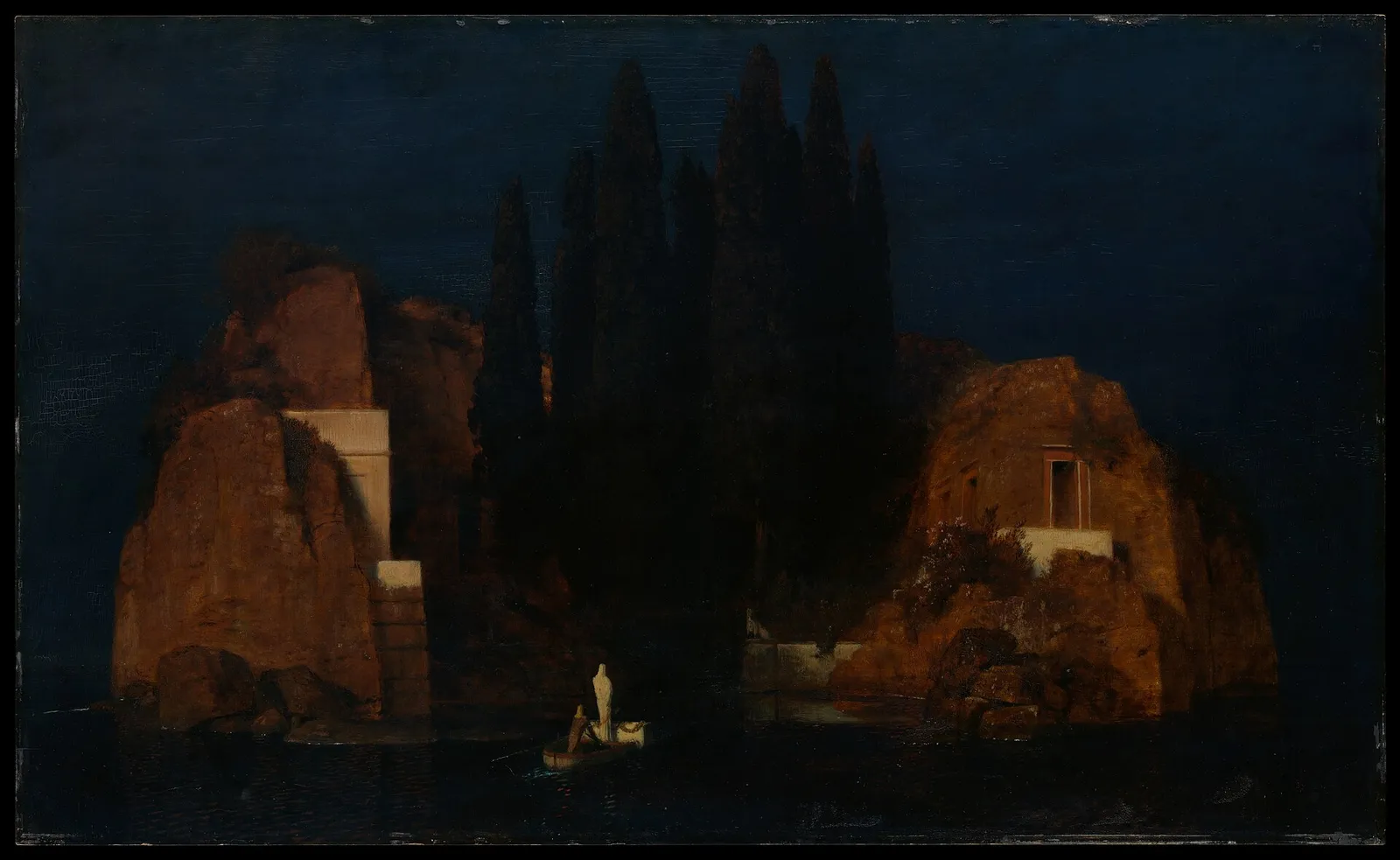
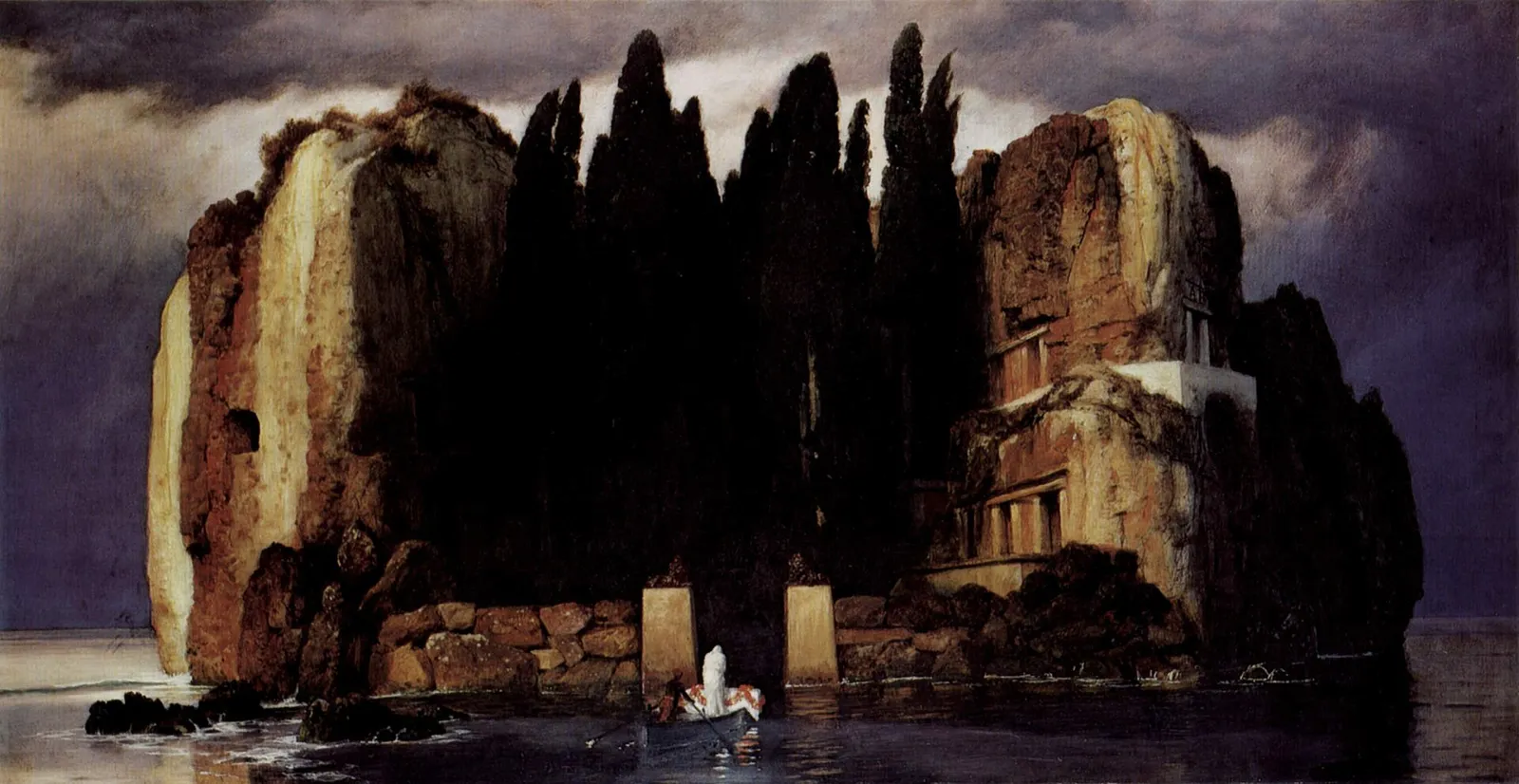
Begin with the boat, because it is the only thing in the picture that moves. An oarsman sits low at the stern. In front of him stands a figure wrapped from head to foot in white, facing the island, and across the bow lies a long box draped in white cloth. The boat is heading for a narrow landing between two cliffs. Behind the landing, a wall of cypresses rises into a night sky, so dark that the trees read as a single black mass. Tomb doorways are cut into the rock. Nothing else moves; there is no wind on the water.
Arnold Böcklin, born in Basel in 1827, was working in Florence when he painted this. In April 1880 a visitor came to his studio: Marie Berna, a young widow whose husband, Georg von Berna, had died some years earlier. On the easel she saw a canvas of a rocky island, still unfinished. She asked for a picture of her own. The Metropolitan Museum of Art, which owns the result, records that Berna commissioned it as a memorial to her late husband.
The standard account, repeated in the museum literature, is that the coffin and the white figure in the boat were added at her request. That small detail changes everything. Without it, the island is a romantic landscape; with it, it becomes a destination. Böcklin sent the finished panel to her in June 1880, and in his covering letter he called it Die Gräberinsel, the Island of the Graves. The title by which the world knows it came later.
How many versions of Isle of the Dead did Böcklin paint?
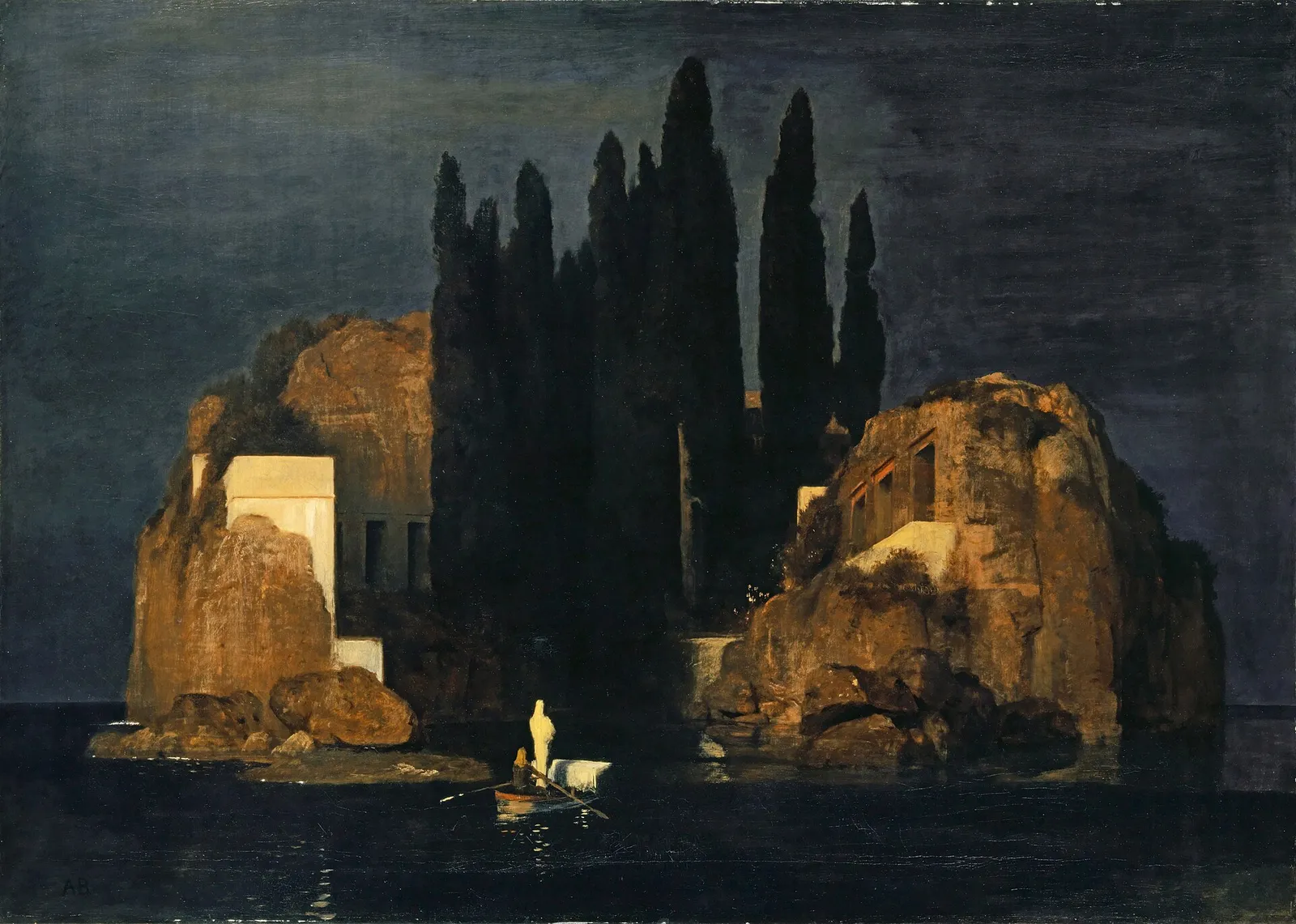
Böcklin painted the subject five times between 1880 and 1886. The Kunstmuseum Basel, which owns the first, counts five versions, of which four survive; the fourth was destroyed during the Second World War and is known only from black-and-white photographs. In 1901, the year of his death at Fiesole, Böcklin and his son Carlo produced a further, late variant, now in the State Hermitage in Saint Petersburg, but it stands outside the main series.
- First version, May 1880. Oil on canvas, about 111 × 155 cm. Kunstmuseum Basel. The canvas Marie Berna saw half finished.
- Second version, June 1880. Oil on wood, 73.7 × 121.9 cm. The Metropolitan Museum of Art, New York. Painted for Berna and sold by her heirs; bought by the Met through the Reisinger Fund in 1926.
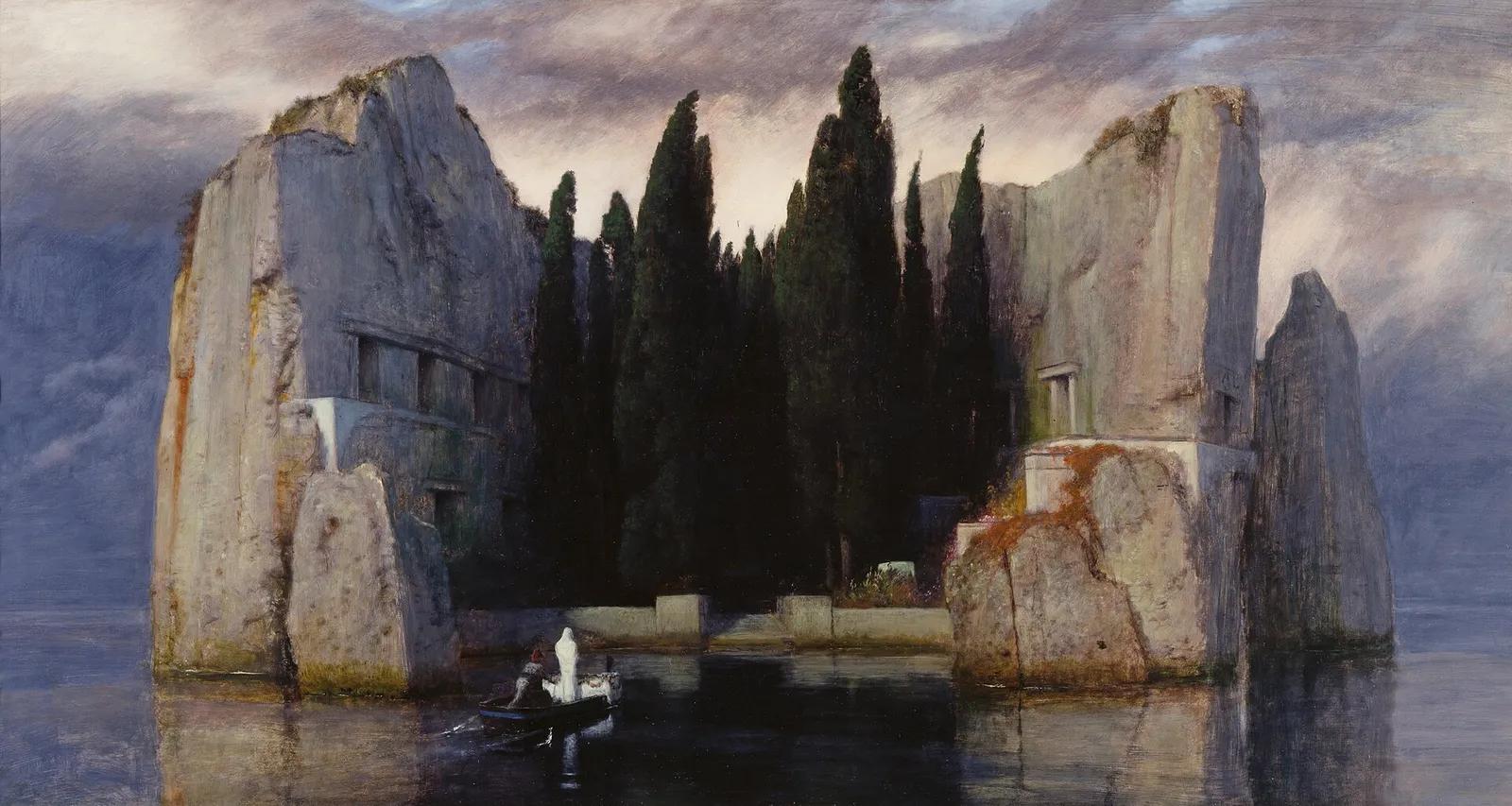
- Third version, 1883. Oil on wood, 80 × 150 cm. Alte Nationalgalerie, Berlin. Commissioned by the Berlin dealer Fritz Gurlitt, who named the picture Die Toteninsel.
- Fourth version, 1884. Oil on copper, about 81 × 151 cm. Destroyed in Berlin during the Second World War.
- Fifth version, 1886. Oil on wood, about 80 × 150 cm. Museum der bildenden Künste Leipzig, which commissioned it.
cm
| I · Basel, 1880 | 155 |
|---|---|
| II · New York, 1880 | 121.9 |
| III · Berlin, 1883 | 150 |
| IV · destroyed, 1884 | 151 |
| V · Leipzig, 1886 | 150 |
Source: The Metropolitan Museum of Art collection record 26.90; Staatliche Museen zu Berlin via Google Arts & Culture (NG 2/80); other versions as catalogued in the literature summarised by Wikipedia
Laid side by side, the versions show an artist refining rather than repeating. The two 1880 pictures are close twins, warm-toned rock under a deep night sky. By 1883 the cliffs have turned pale and monumental, with rusty lichen; a third pinnacle has appeared on the right, and the sky has filled with heavy evening cloud. Each owner received a picture that was recognisably the same place and yet not quite the same night.
How the painting is built: symmetry, stillness and light
Böcklin builds the picture almost like a stage set. The island sits in the middle of a horizontal panel, its two rocky arms opening towards the viewer like wings around a central dark opening. The cypresses form the centre line, a vertical block of near-black that stops the eye. The horizon is low and the water is flat, so the island seems to float rather than stand.
In the Met panel, light strikes the cliffs from the left and makes the ochre rock glow against a sky that is almost the same blue-black as the water. The white figure and the white cloth over the coffin are the brightest notes in the picture, and they sit just below the middle, exactly where the dark cypresses begin. The eye goes from the figure to the trees and back. That shuttle of attention is the picture’s real subject.
Look, too, for what is missing. There are no gulls, no ripples beyond the oar, no sign of anyone waiting on the shore. The tomb doorways are empty. The cypress, planted in Mediterranean cemeteries for centuries, is the only clue to function beyond the coffin itself. Everything else is withheld, which is why viewers have filled the island with their own meanings.
Is the Isle of the Dead a real place?
No single island has been proved as the model, and Böcklin left no statement that settles it. Several candidates are routinely proposed. The Staatliche Museen zu Berlin connect the picture with his stay on Ischia in 1879 and with island cemeteries such as San Michele in Venice. Pontikonisi, a small wooded islet off Corfu with a chapel among its trees, is often named, sometimes combined with Strombolicchio off Stromboli. In Florence, the English Cemetery, a walled, cypress-planted mound near Böcklin’s studio where his infant daughter Maria was buried, is offered as an emotional source rather than a topographical one.
The safest reading is that the island is a composite, built from remembered Mediterranean coastlines and from the long European habit of placing the dead on islands or behind water. Treat any claim that a particular rock is the “real” Isle of the Dead as interpretation, not documented fact.
The same caution applies to the figure in white. It is often read as the widow herself, accompanying her husband’s coffin, or as a priest, a mourner or the soul of the dead. The documents tell us only that the motif was added for Berna. Who the figure is was left open, perhaps deliberately.
From private memorial to a print in every home
The third version changed the picture’s life. Fritz Gurlitt commissioned it in 1883, gave it the title Die Toteninsel and had Max Klinger make an etching of it, published in 1890. Reproductions followed in photographs and cheap prints, and by the turn of the century the image hung in middle-class homes across the German-speaking world. In his 1936 novel Despair, Vladimir Nabokov could describe it as a picture found in every Berlin home. Sigmund Freud is said to have kept a reproduction in his consulting rooms.
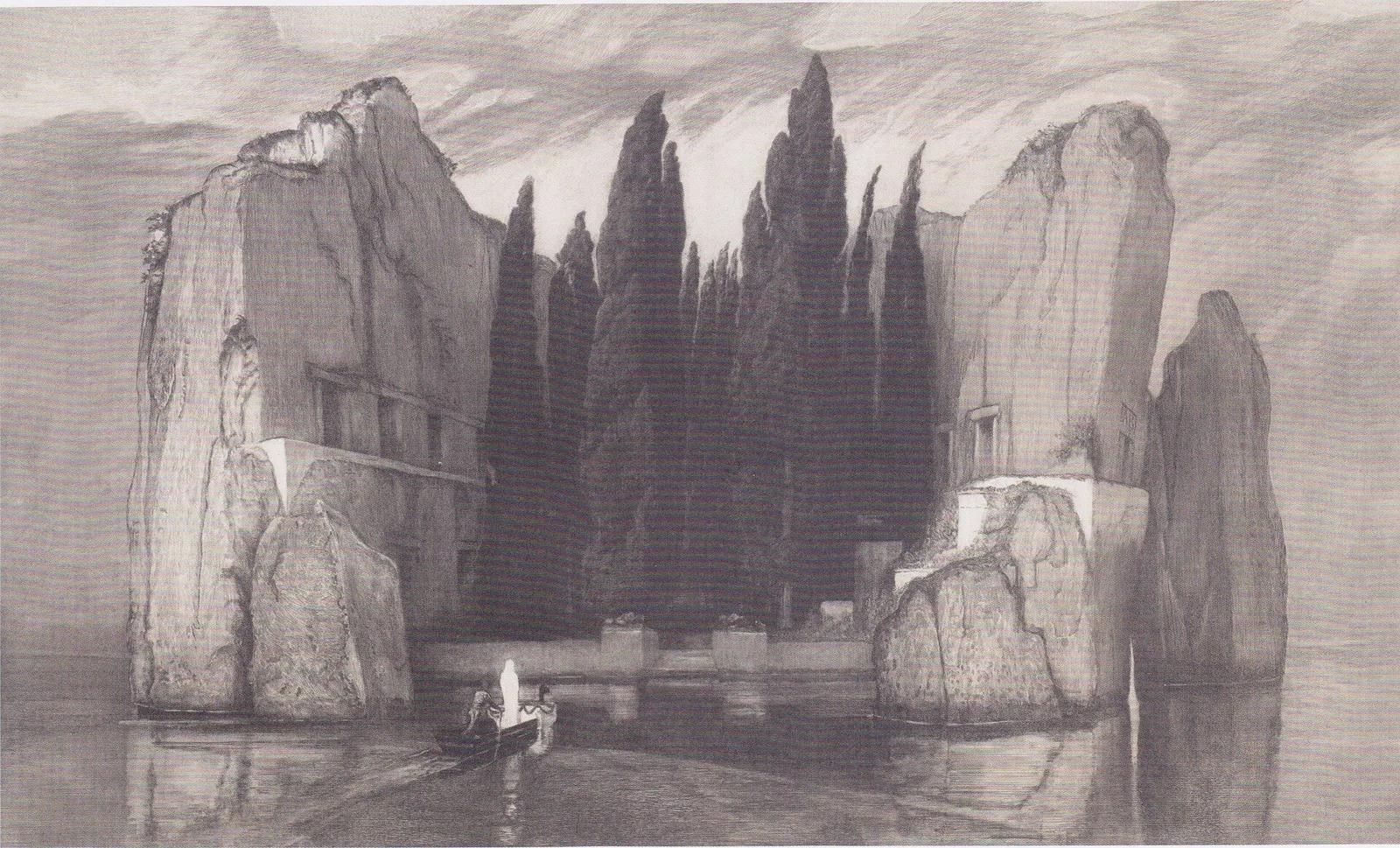
Sergei Rachmaninoff saw a black-and-white reproduction in Paris in 1907 and composed his symphonic poem Isle of the Dead, Op. 29, in 1909. Its rocking 5/8 rhythm suggests the stroke of oars. He later saw a colour original and is reported to have said that had he seen the painting first, he might not have written the music: the grey print, not the oil, was his island.
The picture also acquired a darker owner. When the Berlin version came on the market in 1933, Adolf Hitler bought it; it hung at the Berghof and later in the New Reich Chancellery. Since the war it has belonged to the Nationalgalerie in Berlin. None of this was in Böcklin’s mind in 1880. It is a reminder that a painting’s meaning keeps accumulating long after the paint is dry, and that later owners do not explain the original commission.
Isle of the Dead timeline, 1880 to 2027
1827
Arnold Böcklin is born in Basel on 19 October.
Apr 1880
Marie Berna visits the Florence studio and sees the first version half finished.
Jun 1880
Böcklin sends Berna her panel, calling it the Island of the Graves.
1883
Third version for Fritz Gurlitt, who names it Die Toteninsel.
1886
Fifth version, commissioned by the Leipzig museum.
1890
Max Klinger publishes his etching after the Berlin picture.
1901
Böcklin dies at Fiesole, near Florence.
1909
Rachmaninoff completes his symphonic poem Isle of the Dead, Op. 29.
1926
The Metropolitan Museum of Art acquires Berna’s version.
2027
The four surviving versions are shown together for the first time, in Berlin and then Basel.
Source: The Metropolitan Museum of Art; Kunstmuseum Basel media release, 11 August 2026; Staatliche Museen zu Berlin; Art Institute of Chicago
All four Isles of the Dead together in 2027
For the bicentenary of Böcklin’s birth, the Alte Nationalgalerie in Berlin and the Kunstmuseum Basel are bringing the four surviving versions together for the first time in the exhibition Böcklin: Beyond the Myth. It opens in Berlin on 19 March 2027 and runs until 1 August, then moves to the Kunstmuseum Basel from 4 September 2027 to 23 January 2028, with around 150 works. The Basel museum notes that Böcklin himself never saw the paintings together. Afterwards the four pictures travel to New York for a small presentation at the Met.
That reunion will make the commission story visible in a way reproductions cannot. Berna’s panel will hang beside the larger canvas she first saw, and the difference in scale between a private memorial and a dealer’s showpiece will be plain.
How to look at Isle of the Dead for yourself
In front of the Met panel, stand back first. At a distance the island reads as a dark silhouette with two warm flanks; the boat almost disappears. Then walk in until the white figure is the only thing you see, and notice how small it is against the rock. Böcklin painted the water with very little incident, so the reflections of the cliffs are what tell you it is water at all.
- Count the bright notes: the figure, the coffin cloth, the landing steps, the tomb doorways. They are almost the only whites in the picture.
- Compare the Met and Basel pictures online at the same size. Note the monogram AB in the corner of the Basel canvas and the wider expanse of sky.
- Listen to Rachmaninoff’s Op. 29 while looking at Klinger’s etching rather than the painting, as the composer did.
- Ask what changes if you cover the boat with your thumb. Without Berna’s request, would this be a picture about death at all?
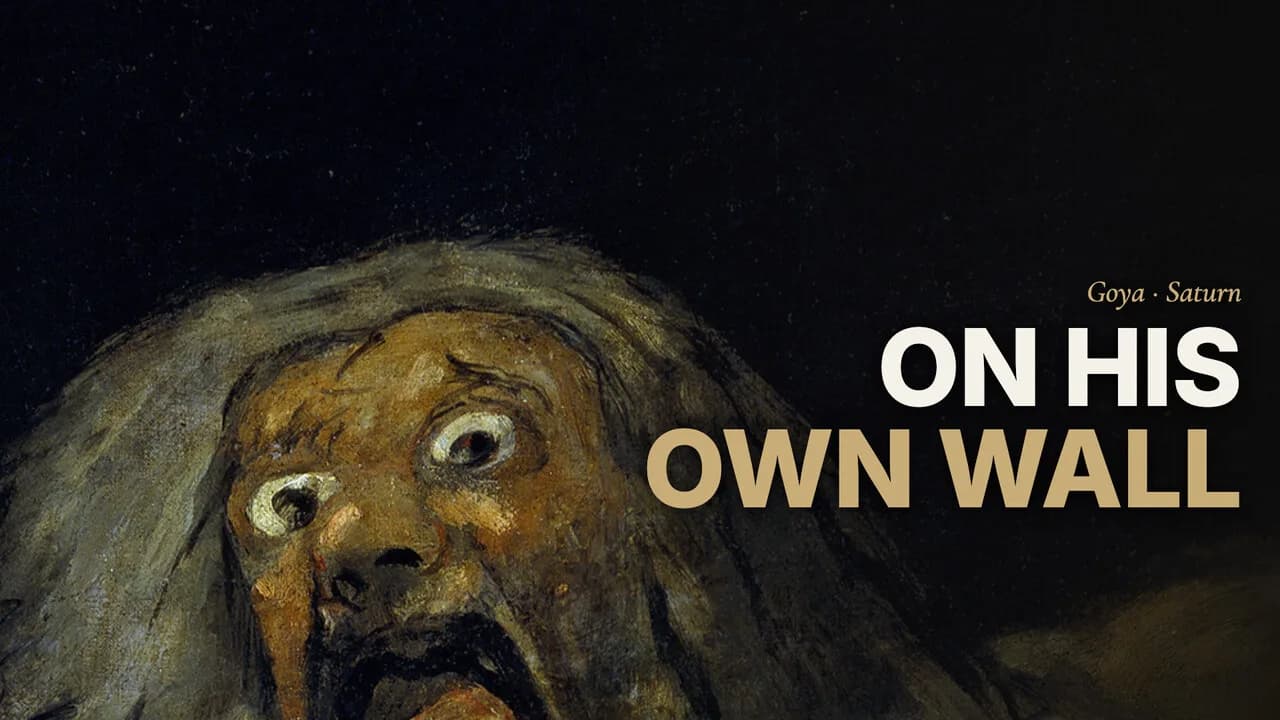
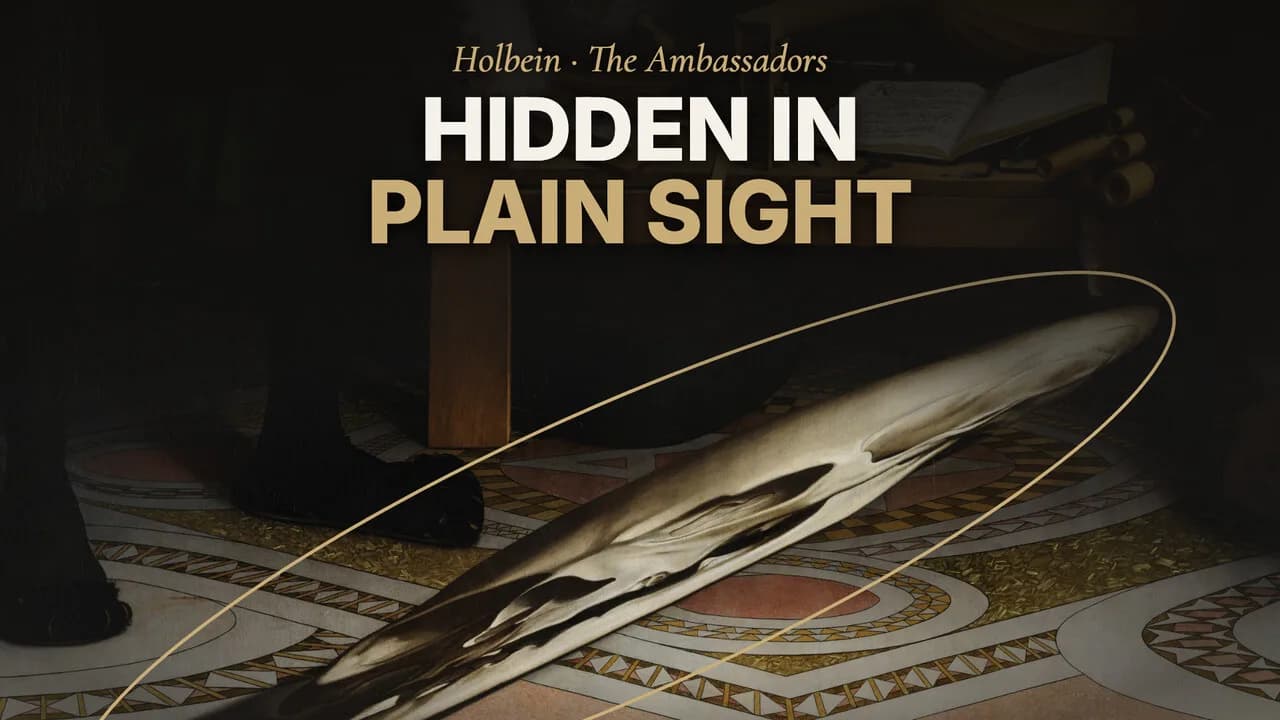
If the subject draws you to other images of mortality, compare it with the anamorphic skull in Holbein’s Ambassadors, the private horror of Goya’s Saturn, or the very public deathbed of Bosch’s Death and the Miser.
Questions people ask
Who commissioned Böcklin’s Isle of the Dead?
The second version, now in the Metropolitan Museum of Art, was commissioned in 1880 by Marie Berna, a widow who saw the unfinished first version in Böcklin’s Florence studio in April that year. The Met describes it as a memorial to her late husband. According to the standard account, the coffin and the white-shrouded figure in the boat were added at her request.
How many versions of Isle of the Dead are there?
Böcklin painted five versions between 1880 and 1886: Basel (1880), New York (1880), Berlin (1883), a fourth on copper (1884) destroyed in the Second World War, and Leipzig (1886). Four survive. A further late variant made in 1901 with his son Carlo is in the State Hermitage, Saint Petersburg.
Who is the white figure in Isle of the Dead?
Böcklin never identified it. The figure was added for Marie Berna, which has encouraged readings of it as a mourner or as the widow herself, but it has also been seen as a priest or the soul of the dead. The documents support only that it was part of her commission, so any identification remains interpretation.
Why did Hitler own Isle of the Dead?
The third version, painted in 1883 for the dealer Fritz Gurlitt, came on the market in 1933 and was bought by Adolf Hitler, who hung it at the Berghof and later in the New Reich Chancellery. It now belongs to the Nationalgalerie in Berlin. His ownership says more about the painting’s later fame than about Böcklin’s intentions.
What did Rachmaninoff base his Isle of the Dead on?
Rachmaninoff saw a black-and-white reproduction of Böcklin’s painting in Paris in 1907 and wrote his symphonic poem Isle of the Dead, Op. 29, in 1909. When he later saw a colour original he was reportedly disappointed, saying he might not have composed the work had he seen the painting first.
Sources and further reading
- Island of the Dead, 1880 (26.90), object data, The Metropolitan Museum of Art
- The Kunstmuseum Basel brings together all of Böcklin’s ‘Isles of the Dead’ (media release, 11 August 2026), Kunstmuseum Basel
- Böcklin. Jenseits des Mythos führt 2027 alle vier noch erhaltenen Versionen der Toteninsel zusammen, Staatliche Museen zu Berlin
- The Isle of the Dead, 1883 (NG 2/80), Nationalgalerie, Staatliche Museen zu Berlin, on Google Arts & Culture
- Max Klinger after Arnold Böcklin, The Isle of the Dead, 1890 (2000.111), The Art Institute of Chicago
- Isle of the Dead (painting), Wikipedia
- Isle of the Dead (Rachmaninoff), Wikipedia
Images are public-domain or CC0 reproductions from Wikimedia Commons, credited under each figure. Interpretations are attributed to the scholars who hold them.
Keep looking
Know someone who should see this?
Send them the story of Isle of the Dead (Die Toteninsel), second version.