
Vinci Stories · Katsushika Hokusai
The Great Wave off Kanagawa: How Hokusai's Cheap Print Conquered the World
Around 1831 an Edo publisher issued a landscape print by an artist of about seventy, coloured with a new imported blue. Thousands of impressions were pulled from the same blocks until they wore out. Today the survivors sell for millions, and the design is on Japan's banknotes and passports.
- Work
- Under the Wave off Kanagawa (Kanagawa oki nami ura), also known as The Great Wave, from Thirty-six Views of Mount Fuji, c. 1830–32
- Where to see it
- The Metropolitan Museum of Art (one of many impressions in public collections), New York
- Reading time
- 8 min
- Updated
What is The Great Wave off Kanagawa?
Under the Wave off Kanagawa, known everywhere as The Great Wave, is a colour woodblock print designed by Katsushika Hokusai and published in Edo (now Tokyo) around 1830–32. It is one sheet in a set of landscapes called Thirty-six Views of Mount Fuji, which proved so popular that ten more designs were added, making forty-six in all. It is not a unique object like a painting. It was printed in thousands of impressions, sold cheaply, and handled, pinned up and thrown away like a poster. That is the first thing to understand about it, and the reason it could travel so far.
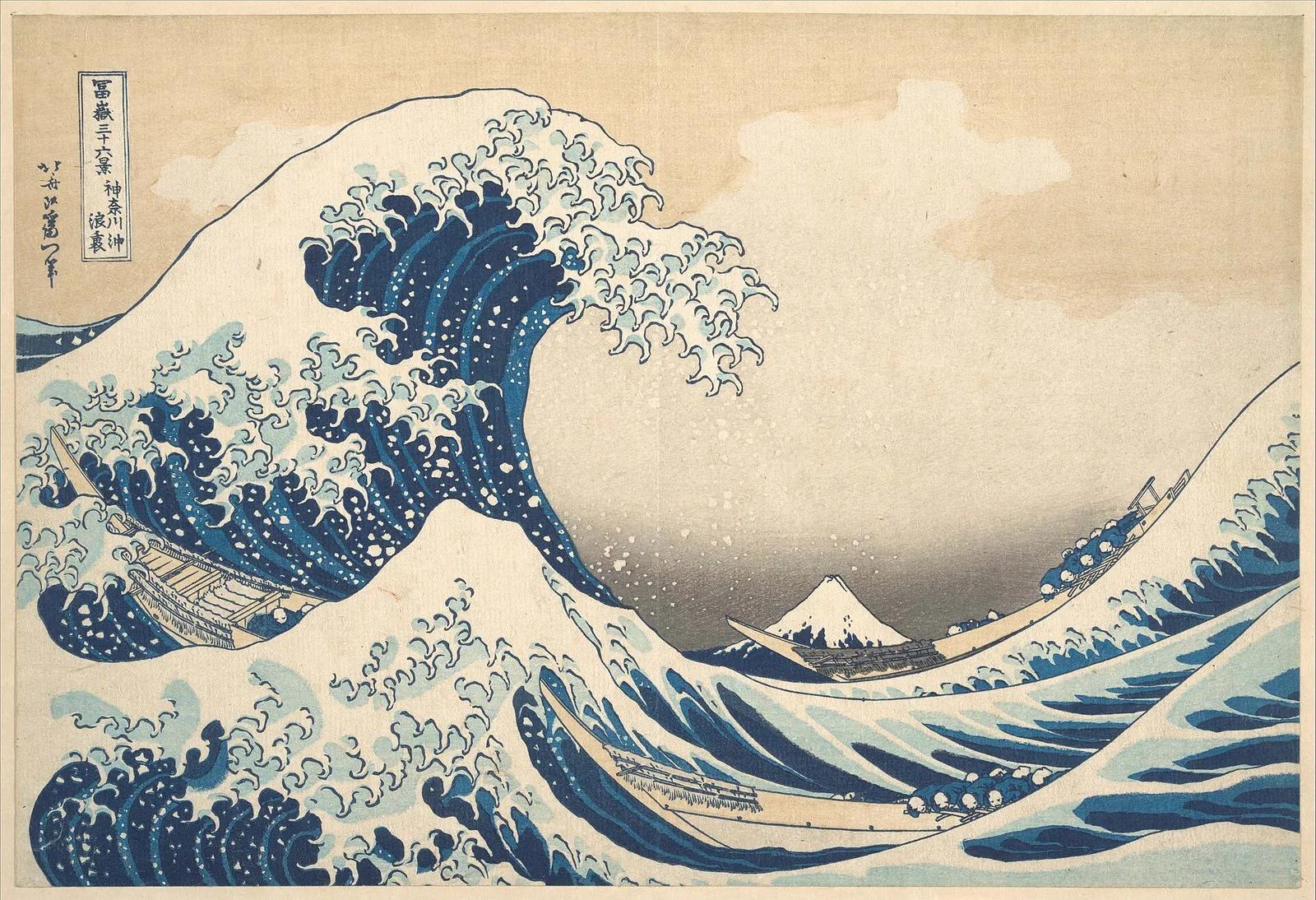
Look closely: boats, claws and a very small Mount Fuji
Read the print from right to left, the way a Japanese viewer would read a page. The sea rises in the right foreground, then the eye travels left and up into the great curling wave, whose crest breaks into fingers of foam that look like claws. Under it are three long, narrow boats, each packed with rowers bent low over their oars. These are fast boats of the kind used to carry fresh fish to market in Edo; the men are not shipwrecked sailors but workers on a daily run, heading into the swell.
Then find the mountain. Fuji is the subject of the whole series, yet here it is a small snow-capped triangle low in the centre, framed by the hollow of the wave as if it too were a wave about to break. The joke and the drama are the same: the most sacred mountain in Japan looks tiny and stable, while the water, which is temporary, looks monumental. Hokusai used a low horizon and a strong foreground in the Western manner he knew from imported European prints, which is one reason European viewers later found the design so legible.
- The title cartouche at top left reads Fugaku sanjūrokkei (Thirty-six Views of Mount Fuji) and Kanagawa oki nami ura.
- The signature beside it reads Hokusai aratame Iitsu hitsu, using the art name Iitsu that Hokusai adopted in 1820.
- Count the boats: three. The one at far left is half swallowed by the falling wave, the second rides the trough in the foreground, and the third is beyond Fuji at right.
- The foam on the main crest is printed as white reserved paper, not white pigment.
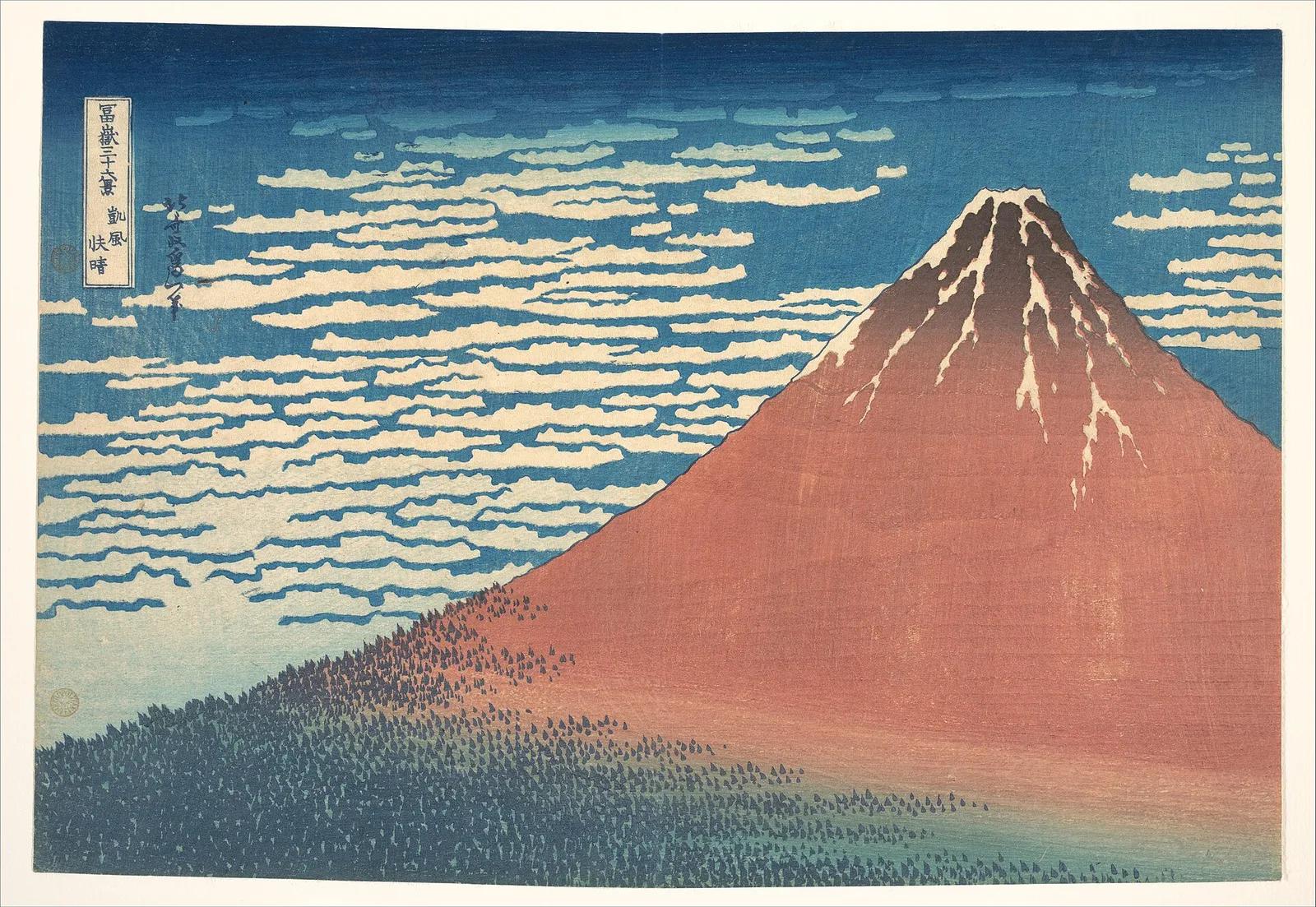
Prussian blue and how the Great Wave was made
A Japanese colour print was a collaboration of four trades. The designer (Hokusai) drew the image; a carver pasted the drawing face down on a block of cherry wood and cut it away to make the key block of black lines; printers took proofs from it, and Hokusai marked which areas should take which colour; further blocks were cut for each colour, and the printers brushed water-based pigment on to each block and pressed dampened paper on to it by hand, one colour at a time, using register marks to align them. The publisher, Nishimuraya Yohachi of the firm Eijudō, paid for all of it and sold the results.
The bet that made the series was a colour. Prussian blue, also called Berlin blue, was first made in Berlin in the early eighteenth century, one of the first modern synthetic pigments. By the late 1820s it was reaching Japan in quantity and at a price print publishers could afford. It was more intense than the traditional plant blues, indigo and dayflower, and it resisted fading far better. Analysis of impressions in the Metropolitan Museum has found that the printers did not simply swap one blue for the other: they used Prussian blue and indigo together, printing one over the other for the strongest outlines.
The price was low. Commentators commonly compare it to the cost of a cheap meal, a bowl of noodles in a city street, and the series was a commercial product in the same market as kabuki actor portraits and guidebooks. That is how a single design could exist in the thousands, and why most impressions did not survive.
How many Great Wave prints exist, and how to date one
Because a woodblock wears, cracks and gets repaired, every impression records a moment in the life of the blocks. Specialists estimate the blocks may have yielded around 8,000 impressions before they wore out. Survivors are far fewer: the British Museum scientist Capucine Korenberg compared photographs of 111 impressions (two more have been identified since), and other estimates put the total at up to about 200.
Korenberg's research, published by the British Museum, found eight separate points of damage on the original key block and showed that the colour blocks were changed three times during the run. The American scholar Roger Keyes had earlier proposed 21 states based on breaks in the cartouche, the signature, Fuji, the boats and the wave; Korenberg's work refined that sequence into a smaller number of wear states. In practice, collectors look for crisp, unbroken lines, a well-registered key block, strong colour that has not faded, and, in the earliest impressions, outlined clouds in the sky.
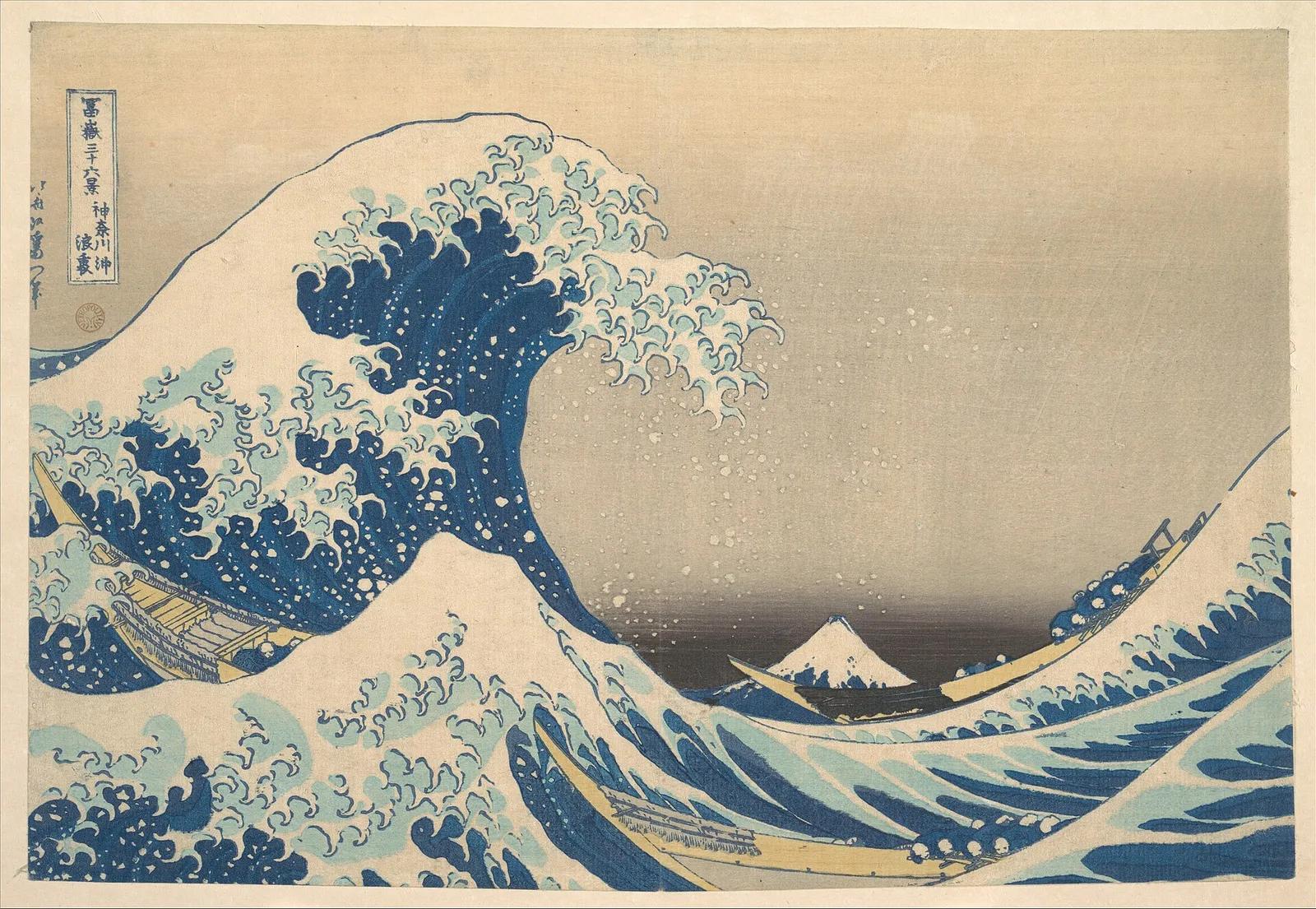
This is why prices range so widely. A late, faded, trimmed impression and an early, fresh one are the same design but different objects, and the market prices them accordingly.
US$ million
| Christie's New York, March 2021 | 1.6 |
|---|---|
| Christie's New York, 21 March 2023 | 2.8 |
| Sotheby's Hong Kong, November 2025 | 2.8 |
Source: Christie's lot results via Artfix Daily (2021); Hyperallergic (2023); My Modern Met (2025)
From Edo to Paris: the Great Wave and Japonisme
For more than two centuries Japan restricted foreign trade to a handful of Dutch and Chinese merchants. The Convention of Kanagawa, signed with the United States in 1854, began to open the country, and within a few years Japanese prints, fans and ceramics were arriving in Europe in quantity. Japan exhibited at the Paris Exposition Universelle of 1867, and dealers in Paris built a trade in prints that artists bought eagerly. Claude Monet collected Japanese prints, Hokusai's among them, for his house at Giverny, and Edmond de Goncourt published a book-length study, Hokousaï, in 1896.
Van Gogh, in Arles, wrote to his brother Theo on 8 September 1888 about Hokusai's waves. He was responding to how the drawing itself carries feeling, rather than the colour.
…waves are claws, the boat is caught in them, you can feel it.
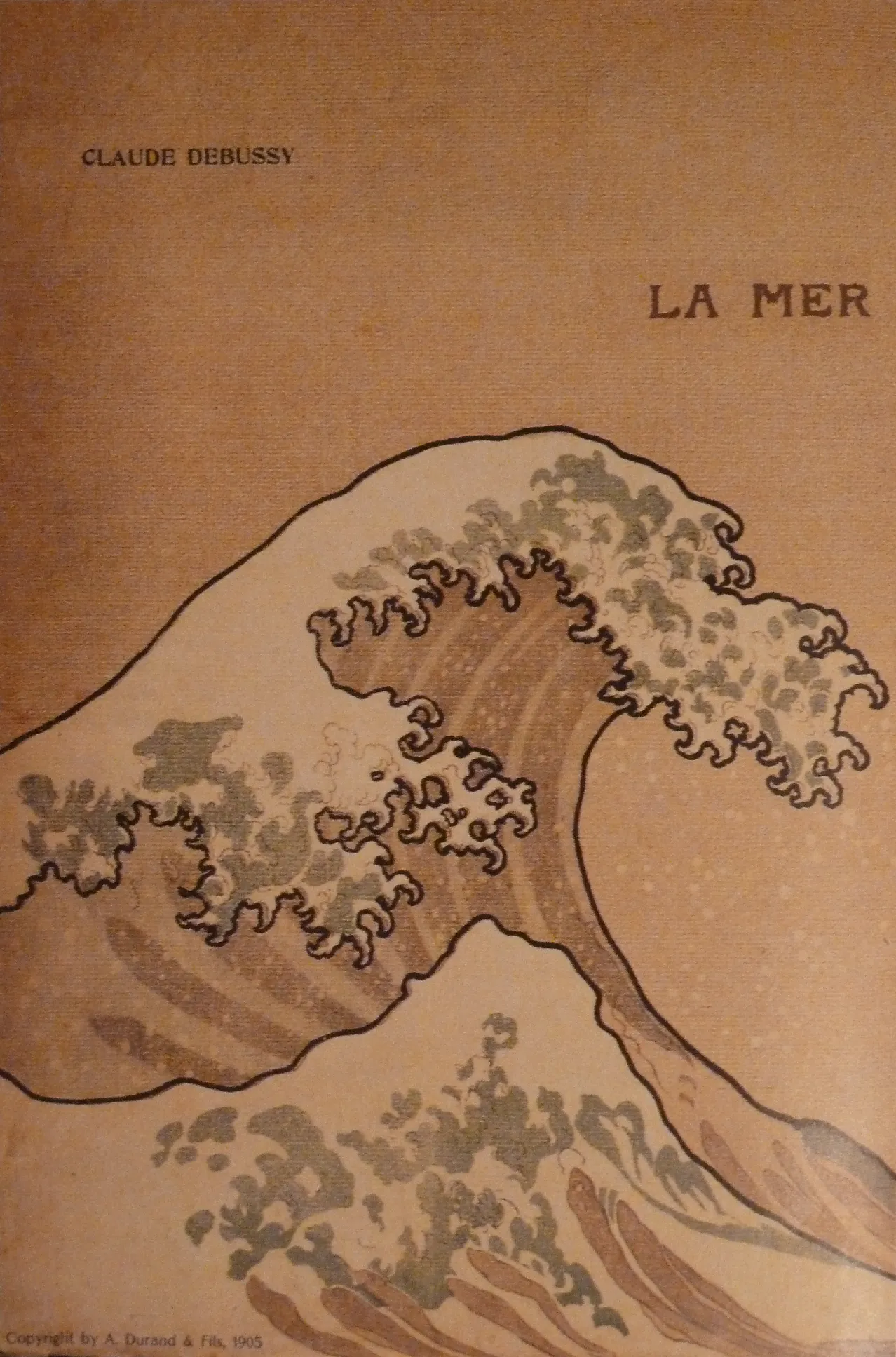
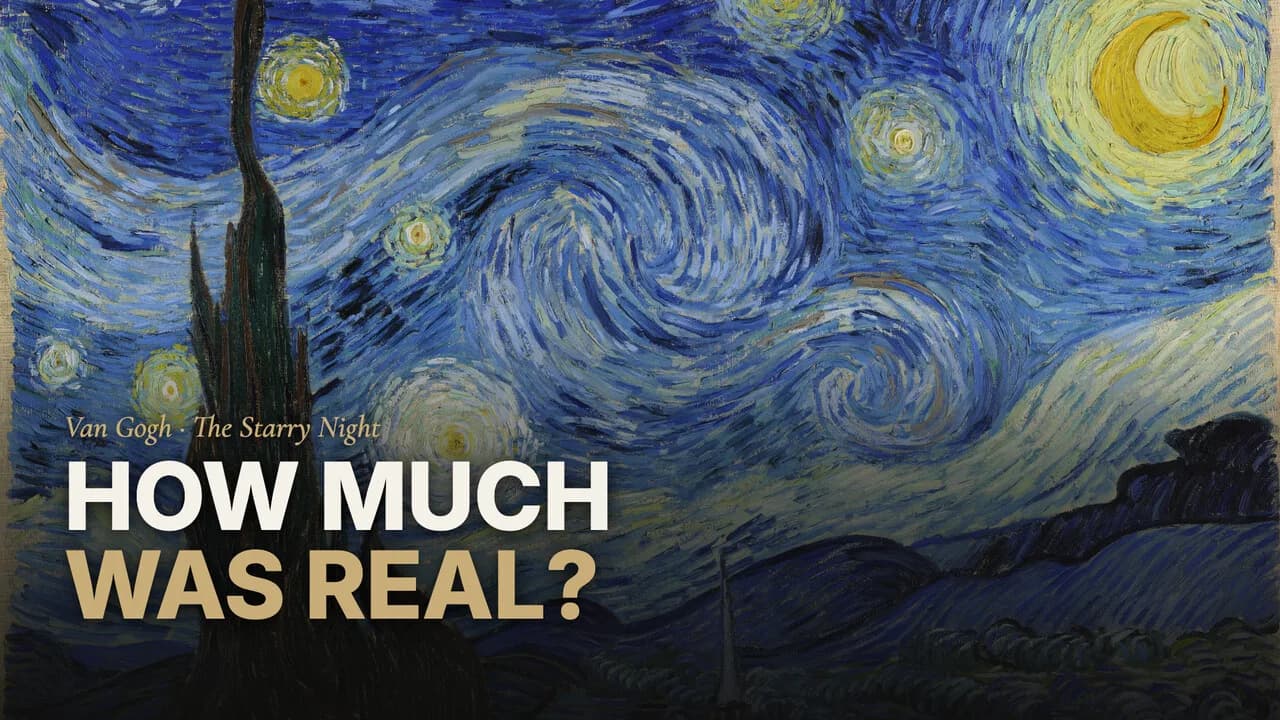
Martin Bailey has argued that the memory of the wave fed into the swirling sky of *The Starry Night* the following year; it is a suggestive comparison rather than a documented source. The connection with Debussy is documented: the first edition of his orchestral work La Mer, published in 1905, carried Hokusai's wave on its cover.
1760
Katsushika Hokusai born in Edo
c. 1830–32
Eijudō publishes Thirty-six Views of Mount Fuji, including the Great Wave
1849
Hokusai dies in Edo, still working
1854
Convention of Kanagawa begins to open Japan to Western trade
1867
Japan exhibits at the Exposition Universelle in Paris
1888
Van Gogh describes Hokusai's waves as claws in a letter to Theo
1905
Debussy's La Mer is published with the wave on its cover
2020
New Japanese passports print the series on their visa pages
2024
New 1,000-yen note issued with the Great Wave on its back (3 July)
Source: The Metropolitan Museum of Art; Art Institute of Chicago; vangoghletters.org via The Art Newspaper; Ministry of Foreign Affairs of Japan, Diplomatic Bluebook 2021; Ministry of Finance, Japan
Everywhere: banknotes, passports and a single shared image
The image that left Japan as cheap merchandise has come home as a national emblem. From February 2020 Japan's Ministry of Foreign Affairs began issuing passports whose visa pages carry designs from Thirty-six Views of Mount Fuji, partly as an anti-forgery measure; the ten-year passport uses 24 of them. On 3 July 2024 the Bank of Japan began issuing a new 1,000-yen note with the bacteriologist Kitasato Shibasaburō on the front and the Great Wave on the back.
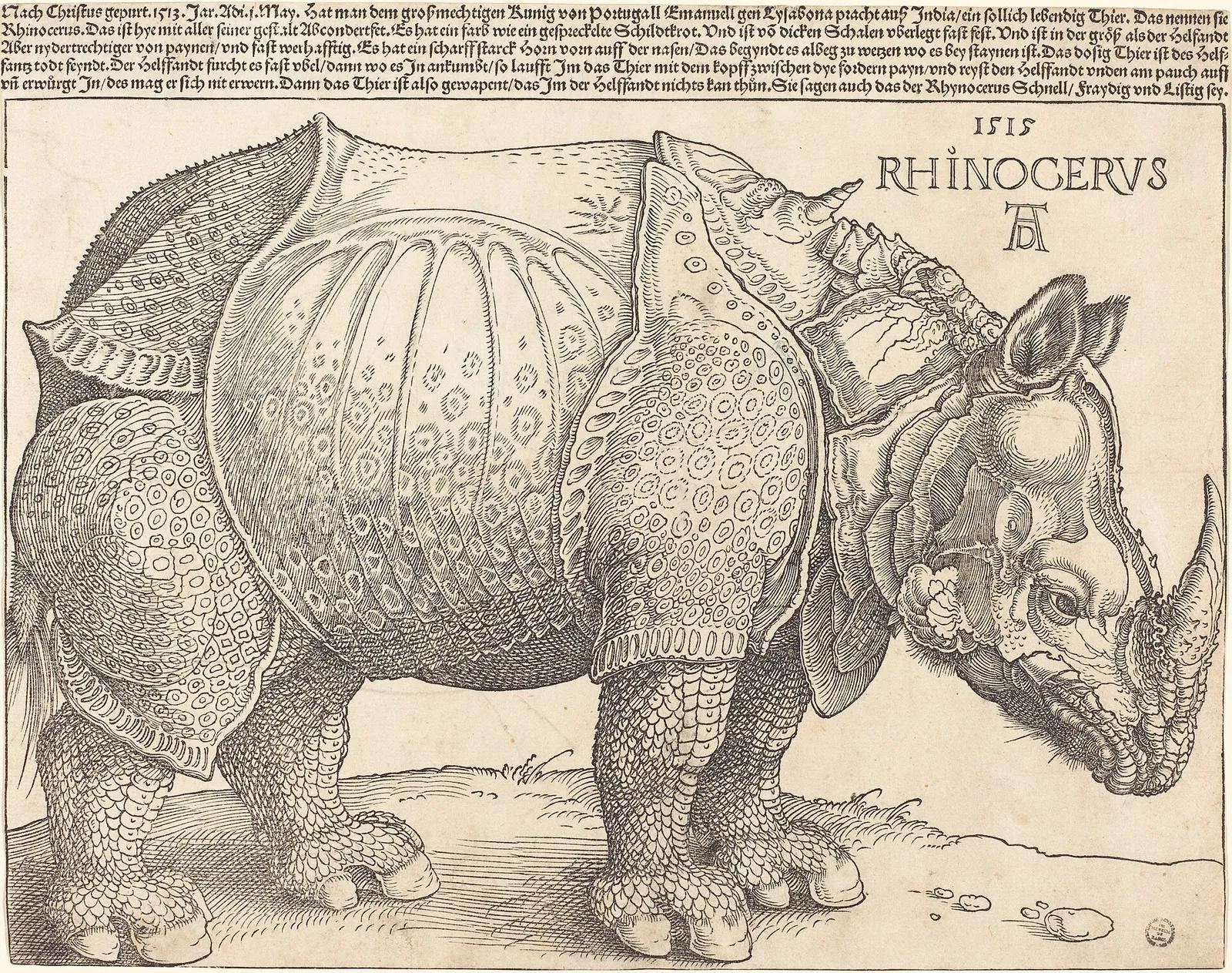
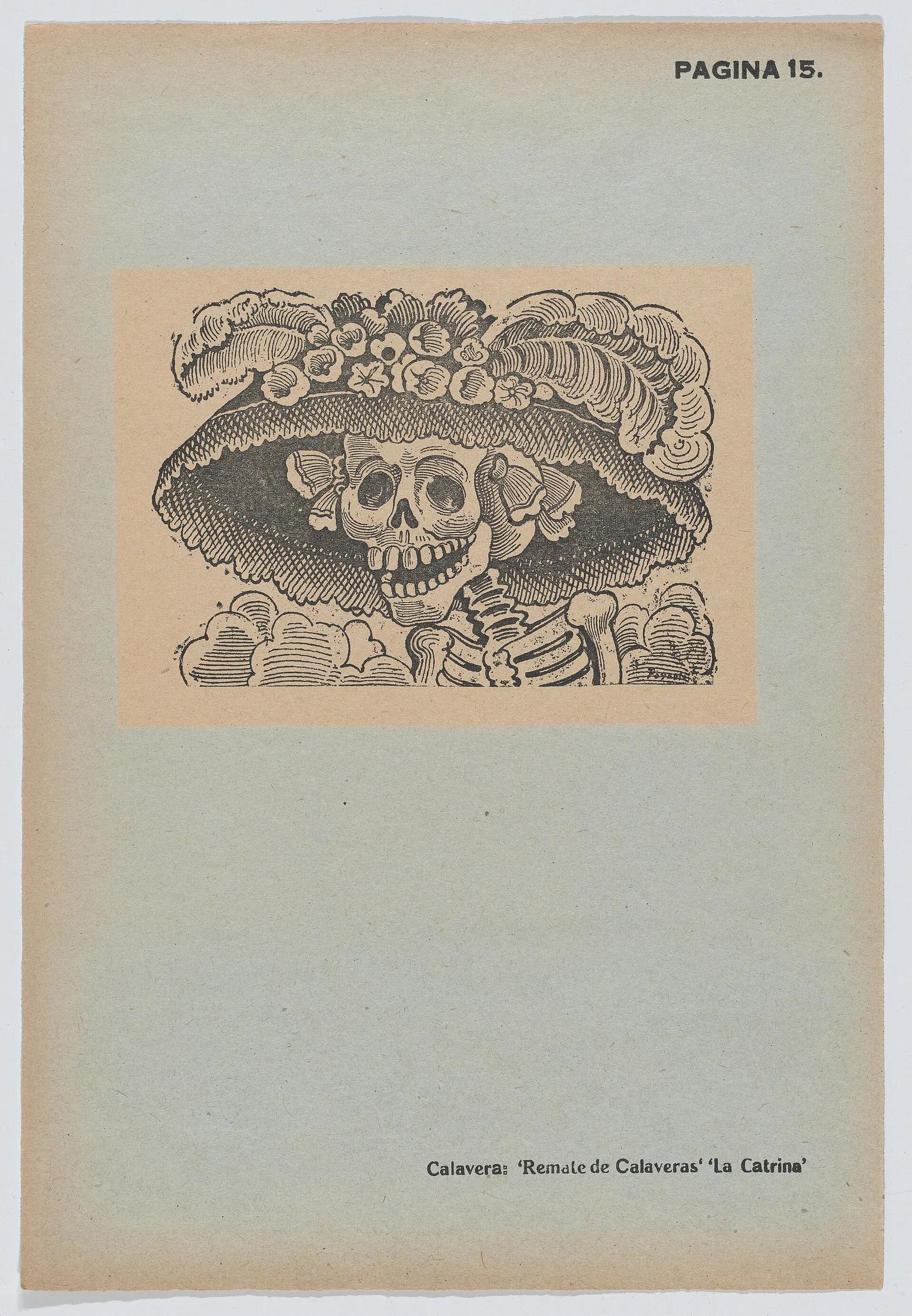
Its afterlife in design, advertising and on screens is too large to list. What links all of it is the print's legibility: a single silhouette that reads at the size of a postage stamp or a wall. Few European prints have travelled as far; the nearest comparison may be Dürer's woodcut rhinoceros, another cheap multiple that fixed an image in the world's mind for centuries. For a print born of cheap reproduction that became a popular icon in its own country, see also Posada's La Catrina.
Hokusai: the old man who said he was only beginning
Hokusai changed his art name many times and moved house, by tradition, dozens of times. When the Thirty-six Views appeared he was about seventy and already famous for his sketchbooks, the Manga. In the postscript to One Hundred Views of Mount Fuji (1834) he wrote that nothing he had drawn before the age of seventy was worth noticing, and that he hoped by the age of a hundred and ten every dot and line he made would be alive. He signed some late works Gakyō Rōjin, the Old Man Mad about Painting. He died in 1849, aged ninety by the Japanese way of counting age.
Where to see the Great Wave, and what to look for
Impressions are held by, among others, the Metropolitan Museum of Art (which owns several), the British Museum, the Art Institute of Chicago, the Museum of Fine Arts, Boston, the Rijksmuseum and the Tokyo National Museum. Because works on paper fade, museums rotate them and show each impression only for short periods, so check before you travel. Many collections publish high-resolution images online, which makes comparison easy.
- Compare two impressions side by side: the sky, the crispness of the lines in the wave's fingers, and the depth of the blues.
- Look for clouds in the upper sky. Their presence suggests an early impression.
- Check the cartouche and signature for breaks in the outline; they record cracks in the key block.
- Ask whether the margins have been trimmed and whether the colours have faded from light exposure.
- Remember the scale: about 25 by 37 centimetres, the size of a magazine spread.
Then step back and read it once more from right to left. The wave rises, the boats dip, and Fuji sits still in the middle of it: a design built to be understood in a second and looked at for a lifetime.
Questions people ask
Who made The Great Wave off Kanagawa and when?
The design is by Katsushika Hokusai (1760–1849), and the print was published around 1830–32 by Nishimuraya Yohachi of the Edo firm Eijudō, as part of the series Thirty-six Views of Mount Fuji. A team of carvers and printers turned Hokusai's drawing into woodblocks and printed it by hand, one colour at a time.
How many original Great Wave prints are there?
Nobody printed a numbered edition. Specialists estimate that the original blocks may have produced around 8,000 impressions before wearing out. Far fewer survive: British Museum research compared photographs of 111 impressions, with two more found since, and other estimates put survivors at up to about 200, many of them in museums.
How much is an original Great Wave print worth?
It depends on the impression's date, condition and colour. A fine early impression sold for US$1.59 million at Christie's New York in March 2021, another for US$2.76 million at Christie's in March 2023, and one from the Okada Museum of Art for about US$2.8 million at Sotheby's Hong Kong in November 2025. Late or faded impressions sell for far less.
Is The Great Wave a tsunami?
No. It is usually understood as a large storm or rogue wave at sea, threatening fishing boats off Kanagawa, not a tsunami, which is a wave caused by an earthquake that becomes dangerous as it reaches the shore. Hokusai's title simply means Under the Wave off Kanagawa.
Why is the Great Wave so blue?
Hokusai's publisher made heavy use of Prussian blue, a synthetic pigment invented in Berlin in the early eighteenth century that became affordable in Japan by the late 1820s. It was stronger and more lightfast than traditional plant blues. The printers combined it with indigo to build the deep outlines of the wave.
Sources and further reading
- Under the Wave off Kanagawa (The Great Wave), JP1847: object record, The Metropolitan Museum of Art
- Under the Wave off Kanagawa (Kanagawa oki nami ura), also known as The Great Wave, Art Institute of Chicago
- A new article: The making and evolution of Hokusai's Great Wave, by Capucine Korenberg, Sainsbury Institute for the Study of Japanese Arts and Cultures
- The Great Wave chronology, Colossal
- Hokusai's "Great Wave" makes a splash at auction, Hyperallergic
- Hokusai's Great Wave print fetches record $1.6 million at Christie's, Artfix Daily
- Hokusai's 'The Great Wave' sells for record-breaking $2.8 million, My Modern Met
- How Van Gogh's Starry Night was inspired by Hokusai's Great Wave, The Art Newspaper
- Diplomatic Bluebook 2021: consular services and new passports, Ministry of Foreign Affairs of Japan
- New Bank of Japan notes, Ministry of Finance, Japan
Images are public-domain or CC0 reproductions from Wikimedia Commons, credited under each figure. Interpretations are attributed to the scholars who hold them.
Keep looking
Know someone who should see this?
Send them the story of Under the Wave off Kanagawa (Kanagawa oki nami ura), also known as The Great Wave, from Thirty-six Views of Mount Fuji.